Why Are Printed Boxes Important for Global Packaging Buyers?

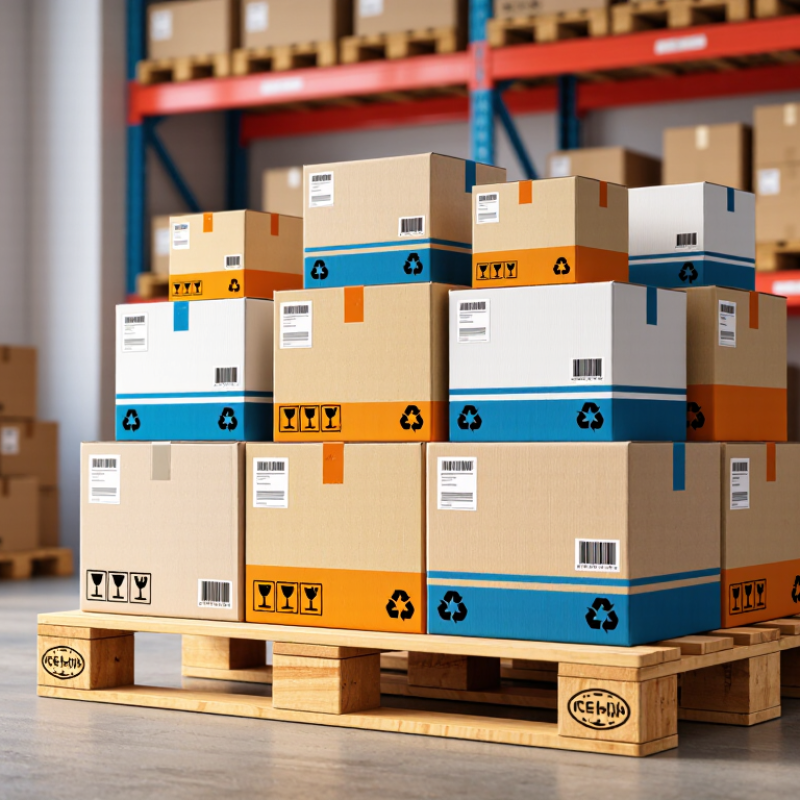
For global packaging buyers, printed boxes are more than attractive containers. They protect products, communicate brand information, and support a consistent customer experience across different markets. A well-designed box can show handling instructions, product details, recycling guidance, and batch information clearly. It may also reduce confusion when products travel through several warehouses and customs checkpoints. Small details matter. A sharp barcode, readable text, and accurate color can prevent costly mistakes.

Experienced buyers usually examine more than artwork. They review board strength, print durability, coating performance, and packaging dimensions. A box that looks excellent in a sample room may fail after humidity, stacking, or long-distance shipping. That is why reliable suppliers should provide material specifications, test results, production samples, and clear quality-control records. Certifications such as FSC or recognized quality systems can add confidence, but buyers should verify their scope and validity. Claims need evidence.

Global packaging decisions also require cultural and regulatory awareness. Text, symbols, inks, and recycling information may need adjustment for specific destinations. One design rarely fits every market perfectly. That assumption deserves questioning. Buyers can reduce risk by requesting pre-production proofs, checking translations, and testing packed boxes under realistic transport conditions. Cost still matters, especially for large orders, but the cheapest option may create higher replacement, damage, or compliance expenses later. Printed boxes work best when design, protection, traceability, and responsible sourcing are considered together. Some compromises are unavoidable. Honest evaluation makes them manageable.
Why Are Printed Boxes Important for Global Packaging Buyers?

What Are Printed Boxes and How Do They Support Global Packaging?

Printed boxes are corrugated or paperboard cartons carrying graphics, text, symbols, and handling details directly on their surfaces. They protect products while communicating identity, size, usage, and shipping information. In global packaging, that dual role matters. A box may travel through warehouses, ports, and retail shelves before reaching its user. Clear printing can reduce handling errors when cartons show orientation arrows, dimensions, or batch references. It also helps buyers compare packaging options without opening every shipment. Simple, visible information works best.

Experienced packaging buyers usually check more than appearance. They review board strength, print durability, color consistency, barcode readability, and moisture resistance. A printed sample should be tested after stacking, rubbing, and temperature changes. This is where specifications become practical evidence. Packaging teams can request approved artwork files, language checks, and documented quality inspections. Local labeling rules also vary, so global buyers should confirm required marks with qualified compliance professionals. A beautiful box is still a weak solution if its text fades during transit.

Printed boxes support market adaptation through controlled artwork versions. One structure can carry different languages, recycling instructions, or handling icons for separate regions. This can simplify procurement, but it may increase inventory complexity. That trade-off deserves honest review. I have seen teams focus on vibrant color while overlooking carton fit, causing movement inside the box and avoidable damage. Better results come from measuring the packed product, testing realistic shipping conditions, and recording changes. Printed packaging is not merely decoration. It is a working communication tool with physical responsibilities.


Which Materials and Printing Methods Are Used for Printed Boxes?

Printed boxes usually begin with two material choices: corrugated board or folding carton. Corrugated board combines fluted paper with liner sheets, giving products cushioning during long-distance transport. Folding cartons use solid paperboard for cosmetics, food, and lightweight retail goods.

According to 2023 statistics from the European Federation of Corrugated Board Manufacturers, European corrugated production approached 50 billion square metres. That scale explains why recycled fibres, local sourcing, and fibre strength matter to global buyers.


According to 2023 statistics from the European Federation of Corrugated Board Manufacturers, European corrugated production approached 50 billion square metres.

Printing method changes both appearance and cost. Flexographic printing works efficiently on corrugated sheets, especially for large volumes and simple graphics. Offset lithography creates sharper images on coated paperboard, but often requires laminated or mounted sheets.

Digital printing supports short runs, variable artwork, and faster sample approval.

A 2024 industry forecast for digital packaging printing estimated the market at approximately US$22 billion in 2023, with strong growth expected through 2028. The figure is useful, though forecasts can shift quickly.

Ink selection deserves equal attention. Water-based inks are common for paper packaging because they reduce solvent-related concerns. Buyers should still request migration, rub-resistance, and recyclability test results.

ISO 18606 provides guidance for packaging designed for organic recycling, but certification does not guarantee performance in every local system.

I have seen attractive boxes fail during humid shipping. Material tests were skipped. That mistake remains surprisingly common.

Print samples should be checked under warehouse lighting, not only on a bright screen.

How Do Printed Boxes Strengthen Branding Across International Markets?

Printed boxes strengthen international branding by turning every shipment into a controlled visual experience. Buyers notice color accuracy, typography, structure, and opening details before reading product claims. A consistent box design helps customers recognize the same company across different languages and retail environments. It also gives distributors a practical reference for shelf presentation.

Data supports this connection. PwC’s 2024 Voice of the Consumer Survey found that consumers were willing to pay an average premium of 9.7% for sustainably produced goods. Printed boxes can communicate responsible choices through clear material information, restrained ink coverage, and recyclable-paper symbols. The 2024 Smithers report, The Future of Global Packaging to 2029, identifies sustainability, automation, and digital printing as major packaging-development forces. These trends matter to global buyers because short digital runs can support regional designs without excessive inventory.

In export projects, small details often decide whether packaging feels local or generic. A bilingual layout may need larger spacing, while dark colors can print differently under varied lighting. Test samples matter. A box that looks premium on a screen may feel weak in hand. That gap is easy to miss. Teams should compare prototypes, transit damage, and customer feedback across markets. Printed packaging is not branding alone; it is repeated evidence of operational discipline. Yet perfect consistency is unrealistic, and local adaptation can sometimes improve trust more than rigid visual control.

What Functional Benefits Do Printed Boxes Offer During Global Shipping?

Printed boxes function as shipping tools, not decoration. During global transit, cartons face compression, vibration, moisture, and repeated handling. Clear printing identifies orientation, contents, quantity, and handling limits without opening the package. That can reduce avoidable warehouse mistakes. In practical packaging reviews, strong contrast and readable panels help workers scan cartons under poor lighting. Small details matter. The UNCTAD Review of Maritime Transport 2023 states that over 80% of global merchandise trade by volume moves by sea. Boxes may therefore spend weeks inside humid containers. Printed handling symbols, aligned with ISO 780 guidance, can encourage safer stacking and inspection. They cannot prevent water damage. That limitation deserves attention.

Printed boxes also support traceability during multi-stage distribution. Lot references, destination fields, and scannable codes help teams match cartons with shipping records. This becomes valuable when outer labels are scratched or separated. A World Bank report, What a Waste 2.0, estimated 2.01 billion tonnes of municipal solid waste in 2016. It projects 3.40 billion tonnes by 2050. Printed recycling instructions may help, but only when materials and local systems are compatible. Overprinting is wasteful. Poor ink contrast creates confusion. A box should communicate quickly, survive abrasion, and avoid unnecessary panels. In reality, buyers sometimes prioritize attractive graphics over compression strength. That is an expensive mistake. Functional printing works best when tested with the carton, closure, pallet pattern, and actual transport conditions.

Why Are Printed Boxes Important for Global Packaging Buyers? — Functional Benefits During Global Shipping
Packaging Function Printed Information or Feature Measurable Data Dimension Functional Benefit During Global Shipping Relevant Standard or Industry Basis
Handling communication Orientation arrows, “Fragile,” “Keep Dry,” and other standardized handling symbols Symbol presence, legibility, contrast, and correct placement on multiple visible panels Communicates handling requirements across language barriers and helps reduce incorrect orientation, rough handling, and exposure to moisture. ISO 780:2015, Packaging — Distribution packaging — Graphical symbols for handling and storage of packages
Shipment identification Human-readable product description, carton number, purchase-order reference, destination, and handling instructions Information completeness, print durability, readability, and consistency with shipping documents Supports identification at warehouses, ports, customs checkpoints, cross-docks, and final-mile delivery locations. Common international logistics practice; transport markings should remain clear throughout the distribution cycle
Machine-readable tracking Printed linear barcode or two-dimensional code linked to shipment or inventory data Scan readability, data accuracy, print contrast, quiet zone, and resistance to abrasion or smearing Enables faster receiving, sorting, inventory updates, exception handling, and shipment traceability across multiple logistics partners. ISO/IEC 15415 for two-dimensional barcode print quality; ISO/IEC 15416 for linear barcode print quality
Transport-test communication Printed box specifications such as gross mass, dimensions, stacking orientation, and test configuration Declared mass, length × width × height, stacking direction, and package configuration Helps packaging buyers, carriers, and distribution centers select appropriate handling equipment, storage locations, and transport-test conditions. ASTM D4169 and ISTA distribution-testing methodologies use package configuration and distribution conditions as test inputs
Compression and stacking awareness Maximum stacking guidance, “Do Not Stack,” or pallet-position instructions when applicable Stacking status, load direction, pallet pattern, and allowable storage orientation Reduces the risk of overloading lower cartons and helps maintain box strength during warehouse storage and container transport. ASTM D4577 for comparative evaluation of stacking performance; actual limits must be validated for the specific box design
Regulatory and safety communication Applicable regulatory marks, material information, recycling instructions, or dangerous-goods marks when required Mark accuracy, required symbol format, permanence, and consistency with shipping documentation Supports regulatory screening and reduces the risk of misrouting, shipment delays, incorrect disposal, or unsafe handling. Applicable transport regulations and ISO 780; dangerous-goods marks must follow the relevant modal regulations when applicable
Tamper visibility Printed security graphics, controlled opening instructions, seal-reference areas, or evidence-of-opening indicators Seal position, visual consistency, print continuity, and evidence of unauthorized opening Makes abnormal opening, carton substitution, or unauthorized access easier to notice during multi-party international distribution. Security effectiveness depends on the complete package system, including board construction, closures, seals, and operating procedures
Customs and document alignment Country of origin, contents description, quantity, handling data, and references matching commercial documents Data consistency between carton print, packing list, invoice, and electronic shipment records Helps reduce manual clarification, misidentification, and avoidable delays during customs and international receiving processes. Requirements vary by destination, product category, transport mode, and customs authority; markings must be verified for each route
Material and treatment disclosure Packaging-material identification, recycling instructions, or wood-packaging treatment references where applicable Correct material statement, symbol accuracy, and visibility after handling and exposure Assists import inspection, waste sorting, and compliance checks, especially when shipments include regulated wood packaging. ISPM 15 applies to regulated wood packaging material such as pallets, crates, and dunnage; it does not generally apply to ordinary corrugated fiberboard boxes
Brand and product differentiation Consistent product names, color coding, SKU references, and visual hierarchy Recognition accuracy, SKU differentiation, print consistency, and error-free carton-to-product matching Improves picking and receiving accuracy while helping global buyers distinguish product variants without opening every carton. Operational benefit depends on artwork control, color-management procedures, SKU governance, and warehouse workflows
Note: Applicable marking, labeling, customs, and dangerous-goods requirements vary by product, destination, transport mode, and packaging configuration. Printed information should be validated against the shipping route and current regulations.

How Should Global Buyers Evaluate Printed Box Suppliers and Standards?

Printed boxes influence product protection, shelf visibility, and buyer trust across international markets. Global buyers should evaluate suppliers beyond attractive artwork and low quotations. A reliable supplier can explain board grade, flute structure, paper weight, ink system, and finishing limits in clear terms. Ask for production samples, not only digital proofs. Check edge crushing, color consistency, folding accuracy, and surface scuffing under realistic handling.

Supplier assessment should include factory experience, quality records, equipment maintenance, and corrective-action procedures. Request evidence of quality systems, such as ISO 9001, when relevant. Environmental claims also need supporting documents, including responsible material sourcing and waste controls. Standards must match the destination market and product use. Food-contact packaging, for example, requires different material and ink controls than general retail cartons. Confirm testing methods, tolerances, and inspection points in writing.

A perfect sample can still mislead. Humidity may soften board during ocean transport. Colors may shift between production batches. I have seen small dimensional errors create costly packing delays. Buyers should request pre-production approval, batch samples, and shipment protection details. Independent inspections can add confidence, but they cannot replace clear specifications. A capable supplier welcomes difficult questions and records every agreed change. That transparency matters.

Get an Instant Quote

Share Your Feedback