How to Ship Boxes with Logo Worldwide?
Shipping boxes with logo can turn an ordinary delivery into a memorable brand experience. The challenge becomes greater when parcels cross borders, climates, and handling networks. A box leaving London may face rain, warehouse stacking, aircraft vibration, and a customer’s impatient knife. Its design must survive all of them.
Packaging strategist Adam Peek describes the principle clearly: “A branded box is not only a container; it is a customer touchpoint.” That idea matters worldwide. The logo should remain visible after sorting labels, protective tape, and rough movement. Strong corrugated board, accurate dimensions, and moisture-aware finishes help protect both the product and the presentation. Small details matter.
A practical shipping plan starts with the product’s weight, dimensions, fragility, and destination. Oversized boxes can increase shipping costs and invite internal movement. Weak boxes can collapse before delivery. Sometimes, the most attractive design is not the best choice. I learned that branding cannot repair poor packaging performance.
This guide explains how to prepare shipping boxes with logo for international delivery. It covers material selection, printing methods, box sizing, inserts, labeling space, and quality checks. It also considers color consistency across suppliers and production batches. A sample box should travel through a realistic test route before mass production.
That step is easy to skip.
Do not rely on appearance alone. Test compression, moisture resistance, closure strength, and logo durability. Reliable packaging protects the product, communicates professionalism, and reduces avoidable delivery complaints. Global shipping is never perfectly predictable, but thoughtful preparation makes the risks easier to manage.
Define Your Custom Box Design, Logo, and Packaging Requirements
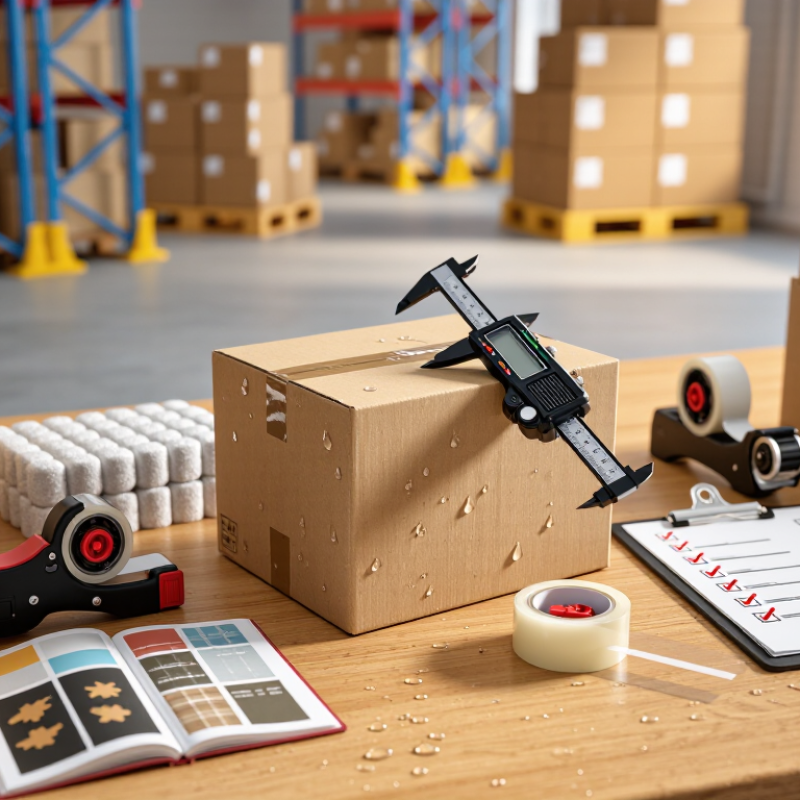
Worldwide box shipping starts with a specification, not a logo file. Define the product dimensions, packed weight, destination zones, and handling risks. Then choose the board grade, closure, inserts, print colors, and moisture protection. A 40-centimeter box can waste space when the product needs only 25. That empty volume increases freight exposure and movement inside the carton. The 2023 Parcel Shipping Index recorded 161.8 billion parcels worldwide in 2022. Your box must survive conveyors, stacking, vibration, and rain. Looks matter, but structure matters more.
Define the logo as a production asset. Specify vector artwork, minimum line thickness, color references, and print tolerance. Ask for a physical sample before approving thousands of units. Check barcode contrast, opening force, tape adhesion, and logo alignment. Do not rely on a screen proof. A recent e-commerce packaging market report identifies right-sizing, protection, and material efficiency as key design priorities. A 2020 international packaging survey found that 60–70% of consumers might pay more for sustainable packaging. That finding deserves caution. Customers may prefer recyclable fiber, yet a damaged replacement shipment creates more waste.
For worldwide fulfillment, write every requirement into a packaging brief. Include carton limits, label zones, language needs, testing standards, and destination-specific recycling guidance. Use metric dimensions and confirm carrier limits before production. Small omissions become expensive quickly. A weak first draft is normal; ignoring it is not. Pilot ten boxes, record damage, and revise the design before committing to scale. Black ink may look elegant on screen, but it can lose contrast on brown kraft board. Test it under warehouse lighting.
Choose Materials, Dimensions, and Printing Methods for Global Shipping
How to Ship Boxes with Logo Worldwide?
A strong logo box begins with the shipping route, not the artwork. Corrugated cardboard is usually practical because it protects products while controlling weight. Choose a flute grade that matches the product’s fragility and expected handling. For humid routes, consider moisture-resistant coating, but test it first. A glossy finish can look attractive and still fail after condensation.
Measure the packed product carefully. Leave enough space for cushioning, but avoid oversized boxes that increase dimensional weight. Keep the box rectangular when possible. Irregular shapes can create storage and transport problems. I recommend testing a filled sample through vibration, stacking, and drop conditions. One test is never enough. I once underestimated corner damage because the box looked strong on a clean warehouse floor. Real shipping is less forgiving.
Tips: Use simple logo placement, high-contrast colors, and readable handling marks. Flexographic printing suits larger runs and consistent designs. Digital printing works well for shorter runs or changing artwork. Use scuff-resistant inks, especially when boxes rub against conveyors. Keep important labels away from seams and edges. Leave a clear area for shipping information. Small design choices matter. Review the packaging after every route test, because a successful sample may still reveal weaknesses overseas.
How to Ship Boxes with Logo Worldwide?
Corrugated flute selection affects box strength, cushioning, printable surface, and shipping efficiency.
E-flute is approximately 1.5 mm high and provides a smoother surface for detailed logos. B-flute is about
3 mm high and offers a practical balance between printability and protection. C-flute is about 4 mm high
and is commonly used when greater cushioning and stacking strength are needed. A-flute is about 5 mm high
and provides the highest cushioning among these standard flute profiles, but it uses more space.
For worldwide shipping, select the smallest internal dimensions that safely fit the product plus protective
clearance, use a stronger board for heavier or fragile goods, and confirm the destination country's packaging
and labeling requirements. Flexographic printing is suitable for economical graphics on corrugated board,
litho-lamination is better for high-resolution artwork, and digital printing is useful for short runs or
variable designs.
Chart values show typical nominal flute heights; actual board thickness varies by paper grade, converting
process, and regional packaging standards.
Prepare Branded Boxes to Meet International Packaging Standards
How to Ship Boxes with Logo Worldwide?
Branded boxes must protect products before they impress customers. International delivery exposes cartons to drops, compression, vibration, and humidity. Choose corrugated board by product weight, box size, and transport route. A large empty carton may collapse under stacking pressure. A smaller, well-fitted box usually performs better.
Use clear handling marks that follow ISO 780 guidance. If wood pallets or crates are used, verify ISPM 15 treatment and marking requirements. For parcel shipments, ISTA 3A testing can simulate common distribution hazards. Test the complete package, including the printed box, tape, inserts, and product. Ink adhesion also matters. Condensation can weaken finishes and make logos unreadable. A beautiful box can still fail.
Tips: Keep the logo away from box seams and labels. Leave a clean address panel. Use water-resistant inks for humid routes. Record carton dimensions and gross weight accurately. The OECD’s Global Plastics Outlook reports 353 million tonnes of plastic waste in 2019, with only 9% recycled. That figure supports reducing unnecessary plastic films and oversized inserts. The World Bank’s What a Waste 2.0 estimates 2.01 billion tonnes of municipal solid waste are generated yearly. Packaging choices deserve more scrutiny. Paper-based materials are not automatically sustainable; coatings, adhesives, and mixed layers can complicate recovery. This is where packaging plans often need another review.
Select Shipping Services, Routes, and Customs Documentation
How to Ship Boxes with Logo Worldwide?
Select the shipping service before printing cartons. Sea freight suits large, non-urgent consignments. Air freight serves samples, seasonal launches, and time-sensitive replenishment. UNCTAD’s Review of Maritime Transport reports that over 80% of global merchandise trade moves by sea. That scale often means lower unit costs, but port schedules can change. I still add buffer days. It feels inefficient, yet missed delivery windows cost more.
Choose routes by destination infrastructure, not only distance. A direct route may reduce handling, while a hub route can offer better frequency. The World Bank’s Logistics Performance Index 2023 used surveys from 4,090 logistics professionals and highlighted customs clearance as a key performance factor. Ask the carrier about transshipment, tracking events, and delivery attempts. Small details matter.
Prepare a commercial invoice, packing list, transport document, and any required origin statement. Describe the boxes, printed materials, and contents accurately. Use the correct HS classification for the shipped goods, not merely “promotional items.” Show quantity, net weight, gross weight, value, currency, and delivery terms. Customs may request proof of value or packaging details. Incorrect data can create storage fees or returns. The World Customs Organization stresses consistent tariff classification and reliable valuation practices. I sometimes find packaging measurements differ between teams. That needs fixing before pickup. Keep digital copies and paper backups. Loose labels fail.
Track Deliveries and Manage Worldwide Returns or Replacements
Shipping boxes with a logo worldwide is only half the customer experience. Delivery visibility and reliable returns often decide whether that experience feels professional.
Use a tracking system that records every handoff, from warehouse scan to local delivery attempt. Customers should receive clear updates when a parcel leaves, pauses, or requires action. The 2023 Retail Returns Report estimated that retail returns reached $743 billion in the United States, equal to 14.5% of annual sales. That figure shows why return planning cannot remain an afterthought. Include a return authorization number, a readable QR code, and instructions printed inside the box. Keep the process simple.
Worldwide replacements need practical controls. Store the original order number, product code, destination, and delivery evidence in one case record. Set service rules for damaged packaging, missing parcels, and incorrect items. A nearby regional return address can reduce transit time and unnecessary costs. The global parcel market reached 161.8 billion shipments in 2022, according to the 2023 Parcel Shipping Index. More parcels also mean more tracking exceptions. Our early process relied too heavily on carrier scans. That assumption was wrong. A scan does not explain a delayed handoff or a failed delivery attempt. Staff should review exception queues daily and contact customers before frustration grows. Test replacement shipments with real addresses and realistic packaging. Small gaps become expensive across borders.
How to Ship Boxes with Logo Worldwide? - Track Deliveries and Manage Worldwide Returns or Replacements
| Destination Region |
Recommended Shipping Method |
Typical Transit Time |
Tracking Coverage |
Common Customs Documents |
Logo Box Preparation |
Suggested Return Window |
Replacement Workflow |
| North America |
Tracked parcel or express courier |
2–7 business days |
Pickup, transit, customs if applicable, out for delivery, delivered |
Commercial invoice; packing list; import details when required |
Use durable corrugated boxes, water-resistant ink, and a plain shipping label over the logo area |
30 days after delivery |
Verify photos and tracking; issue a replacement order within 1–2 business days |
| Europe |
Tracked postal parcel or road service |
3–8 business days |
End-to-end tracking is recommended for cross-border shipments |
Commercial invoice; HS code; VAT or tax information where applicable |
Keep branding clear but do not cover regulatory marks, handling symbols, or address labels |
14–30 days, subject to local consumer rules |
Provide a return label where appropriate and record the parcel condition before dispatch |
| Asia-Pacific |
Tracked air parcel or express courier |
4–10 business days |
Tracking availability varies by destination and handoff carrier |
Commercial invoice; packing list; HS code; country-of-origin information |
Use strong adhesive tape and internal cushioning to protect printed packaging during long transit |
14–30 days, depending on destination law and product category |
Offer replacement before return for low-value damaged items when reverse shipping is inefficient |
| Latin America |
Tracked express service with customs support |
5–15 business days |
Use a shipment portal that records customs holds and delivery attempts |
Commercial invoice; packing list; recipient tax or identification details where required |
Avoid placing the logo across box seams; add a duplicate internal packing slip |
15–30 days after confirmed delivery |
Confirm customs status first, then approve a replacement or refund after the investigation period |
| Middle East |
Tracked air freight or express parcel |
5–12 business days |
Require milestone scans and recipient contact confirmation |
Commercial invoice; packing list; HS code; import permit if product-controlled |
Use moisture-resistant outer packaging and ensure all required markings remain visible |
14–30 days, subject to local regulations |
Contact the recipient within one business day of a failed delivery attempt |
| Africa |
Tracked express parcel or air freight to a local delivery point |
7–18 business days |
Use delivery-point tracking when residential delivery is unavailable |
Commercial invoice; packing list; HS code; recipient contact and customs information |
Use reinforced corners, tamper-evident tape, and a duplicate address label inside the box |
15–30 days after delivery confirmation |
Use photo evidence, delivery scans, and a documented loss or damage claim before reshipping |
Operational tracking fields: Order ID, destination country, tracking number, packaging type, dispatch date, estimated delivery date, customs status, delivery status, return reason, replacement status, and final resolution.