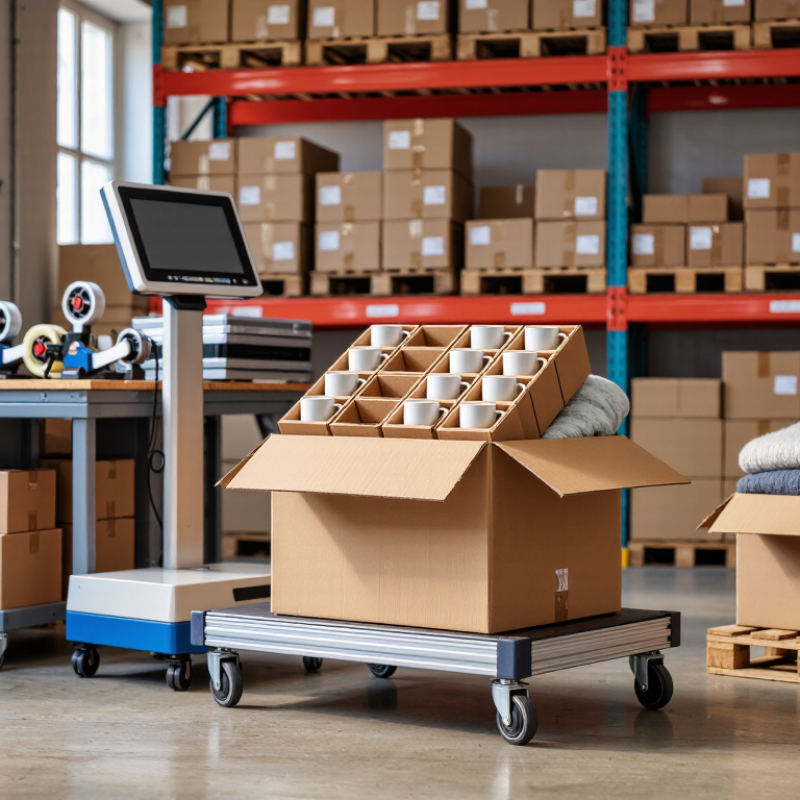
Choosing the right cardboard boxes is less about finding the thickest board and more about matching the box to its job. A set of ceramic mugs needs snug compartments and cushioning; folded blankets need room without excessive empty space. For shipping, consider box strength, item weight, stacking, and the journey ahead. For storage, think about dimensions, handling, and where the boxes will sit. Small details matter. A damp garage, for example, can weaken corrugated board over time.
Packaging educator Walter Soroka’s work on packaging technology offers a useful principle: packaging should protect its contents while fitting the practical demands of handling and distribution. That idea guides this overview of the 2026 best cardboard boxes for shipping and storage. We’ll compare common box styles, board construction, sizes, and features, then explain how to choose based on what you are packing. No single box is best for every task. Even a sturdy box can disappoint when it is oversized, poorly sealed, or exposed to moisture.
Expect practical guidance, not a promise that one product solves everything. Check manufacturer specifications, inspect boxes for creases or damage, and test a sample when packing valuable or unusually shaped items. A little planning helps. Still, real-world packing is imperfect: weight shifts, corners get bumped, and labels sometimes land on seams. The recommendations that follow account for those everyday conditions, while leaving room for judgment when your own items, space, or shipping needs differ.
2026 Best Cardboard Boxes for Shipping and Storage
Cardboard boxes are protective containers made from paper-based board. Most shipping boxes use corrugated board. It contains two flat liner sheets and a fluted inner layer. The flutes create small air channels. These channels improve strength without adding much weight. In practical packing work, I have noticed that box size matters as much as thickness. An oversized box can crush easily when filled unevenly. A snug fit usually performs better.
Manufacturing begins with wood fibers or recovered paper. The fibers are mixed with water, cleaned, and pressed into paper sheets. Heat and rollers help control thickness. A machine then bends one sheet into waves and bonds it between the liners. Adhesive holds the layers together. Cutting and folding create the final box shape. Quality checks often measure compression, moisture resistance, and board thickness. Still, no box is perfect. Humidity can soften paper, while sharp corners can damage weak areas. This detail is easy to underestimate.
Choosing the right box begins with the product, not the shipping label. Common options include regular slotted cartons, full-overlap boxes, corrugated mailers, and rigid storage cartons. Single-wall corrugated boxes suit books, clothing, and small household goods. Double-wall boxes provide stronger protection for heavier tools or fragile equipment. A full-overlap design adds edge strength when parcels face stacking pressure.
The global shipping workload keeps expanding. Pitney Bowes reported 161.8 billion parcels worldwide in 2022. That volume makes consistent box performance important. The U.S. Environmental Protection Agency reported a 96.5% recycling rate for corrugated boxes in 2018. Recycled fiber remains practical, but moisture and repeated handling can weaken it. I have seen a light carton fail when stored on a concrete floor. The box was suitable, but the environment was not.
For long-term storage, choose cartons with straight walls, secure flaps, and enough interior space for cushioning. Archive-style boxes work well for documents and seasonal items. Avoid excessive empty space, because contents can shift during transport. Compression testing, edge-crush ratings, and burst strength offer useful technical guidance. Still, ratings do not replace a simple trial shipment. Measure the packed box, check corner damage, and review how easily staff can lift it. My own selection process is not perfect; cost often receives too much attention. A cheaper box may create more waste when products need repacking.
2026 Best Cardboard Boxes for Shipping and Storage
How to Choose Box Size, Strength, and Construction
Choosing a cardboard box starts with the item, not the packing shelf. Measure length, width, and height after adding protective material. Leave little movement. Excess space allows shifting and corner damage during handling. A box that barely closes can fail too. The flaps need a flat, secure overlap without forcing them down.
Strength depends on weight, stacking, and travel conditions. Lightweight items may suit single-wall corrugated board. Heavy goods or repeated stacking often need double-wall construction. Check the box’s ECT or burst rating when available, rather than judging thickness by touch. ECT helps estimate stacking resistance, while burst strength reflects resistance to punctures and tearing. These ratings are useful, but poor packing can still weaken a strong box.
I once chose a larger box to simplify packing, then watched the contents slide during a short move. That assumption failed. Now I test the fit by gently tilting the sealed box before shipment. Add crumpled paper, molded inserts, or other suitable cushioning when gaps appear. For storage, keep boxes on a dry shelf away from concrete floors and leaking windows. Flat boxes save space, but inspect them for crushed edges, soft spots, or moisture before reuse. My measurements are not always perfect, especially with irregular objects, so I leave room to rethink the design before sealing.
Typical corrugated board thickness by flute construction. Thicker board generally provides greater cushioning and stacking strength, while thinner profiles are lighter and more space-efficient.
E-flute is commonly selected for small products and retail-style packaging; B- and C-flute boards are widely used for general shipping; double-wall constructions are suitable for heavier or higher-load applications. Values are typical industry ranges and may vary by paper grade and manufacturer.
Choosing the best cardboard boxes in 2026 requires more than checking size and price. Start with board strength. Single-wall boxes suit books, clothing, and lightweight household items. Double-wall construction offers better protection for tools, dishes, and dense products. Flute thickness also matters because it cushions impacts and resists crushing. Check the box’s edge crush rating when available, but do not trust the number alone. Manufacturing quality can vary between batches.
Fit is equally important. A box with too much empty space allows movement during handling. A tight fit may damage corners or make sealing difficult. Measure the item, then leave room for suitable padding. Moisture-resistant coatings help in damp garages or delivery areas, although they are not waterproof. Look for clean folds, strong seams, and flaps that meet without force. Recycled content is valuable, but strength should remain suitable for the intended load. I still test unfamiliar boxes with a small shipment first. That extra step can prevent an expensive mistake.
Tips: Press the bottom gently before packing. It should feel firm, not flexible. Use paper or molded padding around fragile corners. Label heavy boxes clearly, and keep their weight manageable for one person. Store unused boxes flat, away from moisture and direct sunlight. A simple drop test helps, but it cannot replace careful packing. Check again.
Choose a box that fits the contents, with enough room for cushioning but not so much that items slide around. A snug fit matters. For books or other heavy items, use smaller boxes that are easier to lift and less likely to split at the bottom. Check each box for damp spots, crushed corners, or weak seams before packing. Reusing a box can save money, but an old crease may fail under weight. I learned that the hard way with a box of kitchenware.
Wrap fragile objects separately and fill empty spaces with clean packing paper or another suitable cushion. Keep heavier items at the bottom and lighter ones above. Close the flaps without forcing them together, then seal the center seam and edges with packing tape. Label the top and one side with the contents and destination area. For storage, keep boxes off concrete floors and away from moisture, heat, and direct sunlight. A dry shelf or pallet helps air circulate.
Tips: Test the bottom seam with a gentle lift before carrying a packed box. Don’t overfill. Keep labels visible, and place frequently needed items where you can reach them without moving a stack. Check stored boxes occasionally; cardboard can soften when humidity rises.
| Box Type | Typical Inside Dimensions | Best Use | Recommended Contents | Suggested Packing Method | Shipping Considerations | Storage Considerations | Key Limitation |
|---|---|---|---|---|---|---|---|
| Small Standard Box | Approx. 12 × 10 × 8 in (30 × 25 × 20 cm) |
Compact, heavy items and short-distance shipping | Books, canned goods, tools, small appliances, and dense household items | Place heavier items at the bottom, fill empty spaces with kraft paper, and keep the total weight manageable for one person to lift. | Use strong packing tape across all main seams. A small box helps reduce shifting, but dense contents can make it heavy. | Easy to stack when filled evenly. Keep it on a dry, elevated surface. | Not suitable for large or lightweight items that need extra volume. |
| Medium Standard Box | Approx. 18 × 14 × 12 in (46 × 36 × 30 cm) |
General household shipping and moving | Kitchenware, clothing, toys, office supplies, and mixed household goods | Wrap fragile items individually, use cushioning on every side, and place heavier contents below lighter contents. | Choose a box with enough room for protective material without leaving large voids. Seal the bottom with multiple strips of tape. | Useful for organized storage because it balances capacity, portability, and stackability. | Overfilling can bow the side panels and weaken the closure. |
| Large Standard Box | Approx. 24 × 18 × 18 in (61 × 46 × 46 cm) |
Bulky but relatively light items | Bedding, pillows, lampshades, stuffed toys, and lightweight seasonal goods | Distribute contents evenly and use soft cushioning to prevent movement. Avoid combining bulky items with dense, heavy materials. | Large parcels may be charged by dimensional weight, depending on the carrier and service. Measure the sealed package accurately. | Do not place heavy boxes on top. Leave a small air gap around stored items that require ventilation. | Can become difficult to carry and unstable when packed too heavily. |
| Book and File Box | Approx. 16 × 12 × 12 in (41 × 30 × 30 cm) |
Documents, books, and records | Paperback books, folders, notebooks, magazines, and archive files | Pack books flat or upright with support. Keep paper dry and avoid filling the box beyond a comfortable lifting weight. | Use moisture-resistant inner protection when shipping paper goods through wet conditions. Label the contents for easier handling. | Store in a cool, dry, stable area away from direct sunlight and concrete floors that may transmit moisture. | Paper products become very heavy quickly; do not overfill. |
| Flat Panel Box | Approx. 24 × 18 × 4 in (61 × 46 × 10 cm) |
Flat, narrow, or framed products | Pictures, mirrors, signs, artwork, panels, and thin equipment | Protect corners first, place a rigid layer on both faces, and center the item with cushioning around all edges. | Mark the package clearly and prevent bending by using a rigid outer box. Do not rely on fragile-item labels alone. | Store vertically only when the contents are designed for vertical storage; otherwise keep the box flat on a supported surface. | Limited depth provides little protection for thick or irregular items. |
| Wardrobe-Style Box | Approx. 24 × 20 × 48 in (61 × 51 × 122 cm) |
Hanging clothing and closet organization | Coats, dresses, suits, uniforms, and other garments on hangers | Install the hanging bar securely, distribute garments evenly, and avoid compressing delicate clothing. | Use only when the shipping service accepts the package size and weight. Reinforce the bottom because the box is tall. | Keep upright, dry, and away from pests. Do not stack other boxes on top. | Large dimensions make it less efficient for parcel shipping and harder to handle. |
| Double-Wall Corrugated Box | Commonly available in multiple sizes; select an interior size that leaves room for cushioning | Heavy, fragile, or higher-value contents | Small machinery, ceramics, electronics, dense tools, and breakable household goods | Use a cushioning system that surrounds the item on all sides. Prevent direct contact between the product and the box walls. | Useful when extra compression resistance is needed. Inspect the box for crushing, punctures, or water damage before use. | Suitable for repeated handling, but store it away from humidity because corrugated fiber loses strength when wet. | Heavier and more expensive than a single-wall box of the same size. |
| Telescoping Box | Adjustable length; commonly used for long items | Long, narrow products that do not fit standard cartons | Posters, rods, tubes, trim pieces, sports equipment, and long components | Use end protection and fill the lengthwise voids so the item cannot slide during handling. | Measure the final length, width, and height after adjustment. Oversized or unusually long parcels may have additional handling requirements. | Store horizontally with support along the length to reduce sagging. | Long packages are more vulnerable to bending and conveyor handling damage. |
| Padded Mailer | Common sizes range from approximately 6 × 9 in to 14.5 × 19 in | Small, flat, and non-fragile items | Books, clothing, documents, accessories, and soft goods | Use an inner sleeve or bag for moisture protection, then center the item so it is not pressed against the opening. | Check whether the item can withstand bending and compression. Do not use a mailer for fragile objects without a rigid inner container. | Useful for short-term organization of small items, but it offers limited crush protection. | Insufficient for sharp, heavy, or breakable contents unless reinforced internally. |
| Archive Storage Box | Approx. 15 × 12 × 10 in (38 × 30 × 25 cm) |
Long-term document and household storage | Tax records, receipts, photographs, letters, and small personal collections | Use acid-free folders or sleeves for sensitive paper. Keep contents upright or evenly supported and avoid overpacking. | Use an outer shipping carton if the archive box will be transported. Protect it from rain and rough handling. | Label two sides, keep it off the floor, and maintain a cool, dry environment with stable temperature and humidity. | Designed primarily for organization and storage, not heavy parcel handling. |

We offer Packaging Boxes delivered to your door. Secure, professional, and affordable, our custom made packaging boxes are guaranteed to protect and transport your valuable items. Our devoted team is always there to serve you.