Menu
Close
Global commerce is entering 2026 with packaging costs, sustainability targets, and delivery risks under closer scrutiny. For importers, bulk cardboard boxes are not merely low-cost shipping supplies. They influence product protection, warehouse efficiency, freight volume, and customer experience.
Smithers’ The Future of Global Packaging to 2029 identifies continued growth in packaging demand, supported by e-commerce, food distribution, and international trade. Its analysis also highlights pressure to reduce material use and improve recyclability. The Fibre Box Association reports that corrugated packaging remains essential across retail, manufacturing, agriculture, and logistics. These findings matter when buyers compare box suppliers across regions. A cheaper unit price can become expensive after oversized freight, weak stacking strength, or high damage rates.
Performance starts with measurable specifications. Buyers should review flute type, paper grade, edge crush test, bursting strength, moisture resistance, and internal dimensions. A 600 × 400 × 300 mm box behaves differently from a smaller carton when stacked on a humid container floor. Pallet patterns also affect cubic utilization. Small changes can reduce empty space and freight charges.
No single specification wins every lane. That is worth remembering. A lightweight box may suit domestic fulfillment but fail during long ocean transit. Recycled content can support sustainability goals, yet it may require stronger design in demanding conditions. Reports provide direction, not guaranteed results. Supplier samples, compression testing, factory audits, and documented quality controls remain necessary. This 2026 guide evaluates bulk cardboard boxes through that practical lens, helping global buyers balance protection, compliance, cost, and environmental responsibility.

For 2026 global purchasing, cardboard box selection should match the product, route, and storage environment. Single-wall corrugated boxes suit books, clothing, and lightweight household goods. Double-wall boxes provide better stacking strength for tools, ceramics, and dense products. Heavy items may need reinforced corners or stronger board grades.
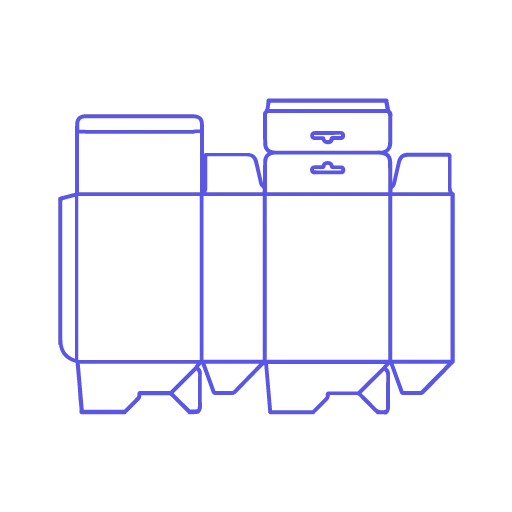
Die-cut boxes create consistent shapes for retail packs and smaller components. Five-panel boxes protect long products, such as lighting parts or rolled materials. Telescoping boxes adjust to different product lengths, although they may require extra packing material. Corrugated mailers work well for compact shipments that need quick opening and clean presentation.
In practical packing trials, I check box dimensions after inserting the product, not before. A few empty centimeters can cause movement and crushing. Use paper cushioning, corner protection, or molded inserts when needed. Moisture-resistant coatings help during sea freight, but they do not replace dry storage. Ask suppliers for board grade, burst strength, edge crush data, and compression results. Request samples from the same production method. Small differences matter.
A perfect box does not exist. Sometimes, a lighter box performs better because it fits tightly and reduces shifting. Sometimes, the cheaper option fails after humid storage. Test drop resistance, stacking, and pallet compatibility before placing a bulk order. Include realistic loading conditions, because laboratory results may not reflect rough handling. Allow reasonable size and print tolerances in your purchasing plan.
Practical comparison of common corrugated cardboard box formats for international shipping, storage, and bulk procurement
| Box Type | Typical Construction | Common Uses | Typical Load Position | Key Advantages | Important Buying Considerations |
|---|---|---|---|---|---|
| Regular Slotted Container (RSC) | Single-wall corrugated board; flaps meet at the center of the box | General merchandise, spare parts, packaged goods, e-commerce products, and export cartons | Suitable for light to medium loads when stacked correctly | Most widely available format; efficient material use; easy machine or hand assembly | Specify internal dimensions, board grade, moisture exposure, stacking height, and pallet pattern |
| Full Overlap Slotted Container (FOL) | Slotted carton with full-length overlapping flaps that reinforce the top and bottom | Dense products, metal components, books, hardware, and items requiring stronger bottom support | Medium to heavy loads; often used for stacking | Improved compression and puncture resistance compared with standard overlapping flaps | Uses more board and may require additional folding force; confirm closure and tape requirements |
| Half-Slotted Container (HSC) | Open-top corrugated carton with bottom flaps; commonly paired with a separate lid | Bulk storage bins, warehouse picking, retail replenishment, and products loaded from the top | Light to medium loads; stacking depends on wall and lid design | Fast loading and unloading; convenient for repeated warehouse access | Order the lid separately if required; check whether exposed contents need dust or moisture protection |
| Double-Wall Corrugated Box | Two corrugated flute layers separated by liners; commonly made with larger and smaller flute combinations | Heavy machinery parts, appliances, furniture components, export cargo, and long-distance distribution | Medium to heavy loads and higher stacking requirements | Higher compression, cushioning, and puncture resistance than single-wall board | Higher purchase cost and storage volume; verify edge-crush or burst performance for the intended load |
| Triple-Wall Corrugated Box | Three corrugated flute layers with multiple liners for demanding load conditions | Industrial equipment, large engineered parts, automotive components, and heavy export shipments | Heavy loads; suitable for demanding handling when properly designed | High stiffness and strong resistance to compression and impact | Greater weight, cost, and shipping volume; confirm handling equipment and pallet limits |
| Five-Panel Folder | One scored corrugated blank wraps around the product with a long protective flap | Long products, furniture panels, doors, frames, glass components, and elongated industrial goods | Light to medium loads; usually packed horizontally | Good surface coverage with fewer seams; protects long edges and faces | Measure product length carefully; additional edge protectors may be needed for fragile items |
| Die-Cut Mailer Box | Precisely cut and creased corrugated blank with locking tabs or tuck-in closure | Small consumer products, subscription shipments, accessories, books, and direct-to-customer orders | Light to medium loads; generally not optimized for high warehouse stacking | Fast assembly; attractive presentation; often reduces the need for tape | Higher tooling cost for custom shapes; confirm dimensional-weight impact and closure security |
| Telescoping Box | Two or more components slide over one another to accommodate variable product lengths | Pictures, mirrors, long components, irregular-height products, and products with variable dimensions | Light to medium loads; stacking depends on overlap and closure design | Flexible sizing; useful when one carton must fit several product variants | Maintain sufficient overlap between sections; add corner protection for fragile contents |
| Vented Produce Box | Corrugated carton with ventilation holes or slots positioned for airflow and handling | Fresh produce, flowers, bakery products, and other goods requiring air circulation | Light to medium loads; stacking must preserve ventilation openings | Supports airflow and cooling; easy to handle and palletize | Moisture can reduce board strength; specify wet-strength treatment or coatings when cold-chain exposure is expected |
| Octagonal or Multi-Sided Box | Multi-panel corrugated construction designed to distribute pressure around rounded or bulky products | Rolled materials, drums, large containers, furniture parts, and oversized industrial products | Medium to heavy loads; often secured with strapping or stretch wrap | Adapts to non-rectangular products; can reduce unused internal space | More complex converting and pallet planning; confirm container utilization before ordering |
Note: Actual compression strength, stacking performance, and permissible load depend on board grade, flute combination, box dimensions, humidity, storage duration, pallet pattern, and handling conditions. Request a test certificate or sample validation for critical export applications.