
Why Choose a Long Distance Wireless Camera?
Remote monitoring is becoming a practical requirement for farms, warehouses, construction sites, and large residential properties. MarketsandMarkets estimates that the global video surveillance market will grow from approximately $53.7 billion in 2023 to $83.3 billion by 2028. This expansion reflects stronger demand for flexible security coverage. A Long Distance Wireless Camera can reduce trenching, wiring costs, and installation time across wide outdoor areas. It may connect a gate, storage yard, or distant loading zone to one monitoring system.
The value is visible in daily use. An installer can position a camera beside a field entrance, then check vehicles from a control room several hundred meters away. Wireless transmission also helps when concrete, roads, or landscaping make cable installation disruptive. However, distance claims need careful interpretation. Walls, trees, rain, radio interference, and antenna height can weaken the signal. Manufacturer ranges often describe open-air performance, not complex real-world sites.
Security professionals should examine more than advertised reach. Look for measured range tests, weather protection ratings, strong authentication, encrypted transmission, and stable firmware support. The National Institute of Standards and Technology recommends secure device configuration and lifecycle management in its IoT guidance. Independent market research from Grand View Research also identifies growing adoption of wireless security cameras, although estimates differ by methodology. That difference matters. A longer link is not automatically a better system. A careful site survey, reliable power plan, and suitable network design remain essential for dependable evidence and continuous monitoring. Mistakes happen, especially when installers trust specifications without testing the actual environment.
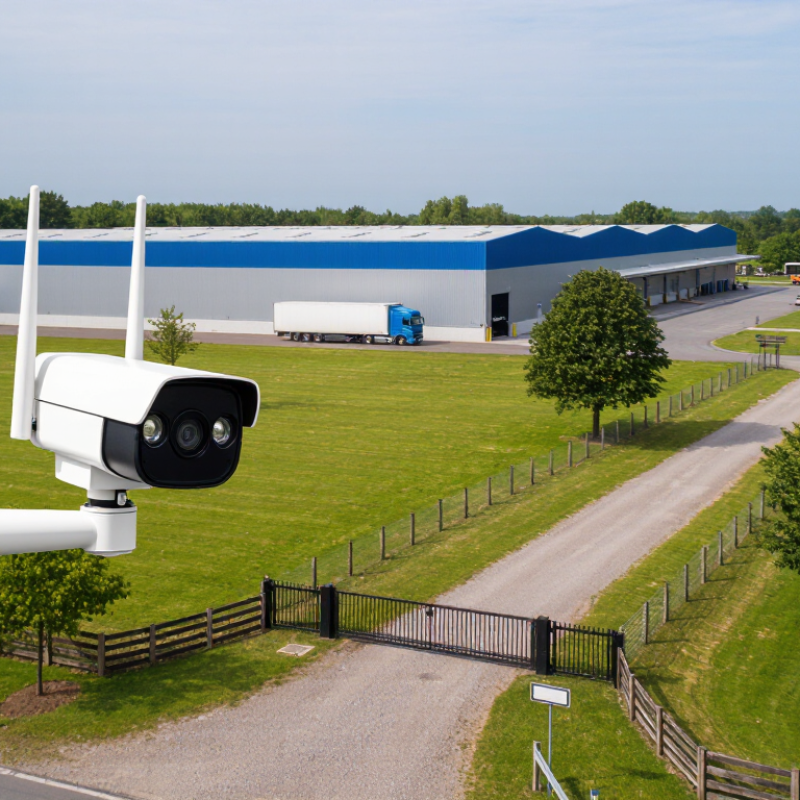
A long-distance wireless camera captures video and sends it beyond the range of ordinary home Wi-Fi. It may use extended radio links, cellular networks, or a separate wireless bridge. The camera still needs power, even when no data cable is installed. This detail is easy to overlook.
In practical use, distance depends on walls, trees, weather, antenna placement, and network traffic. A clear field can support a stable connection across a large property. Thick concrete may weaken the signal within a single building. During installation, I would test the live feed from the exact viewing point. A strong signal near the camera does not guarantee smooth video at the monitor.
Useful models often include motion alerts, infrared night vision, two-way audio, and encrypted transmission. Encryption helps protect recorded footage during transfer and storage. Choose a system with clear privacy controls and regular security updates. Follow local rules, especially when recording shared spaces or neighboring property. Inform people when monitoring is reasonably expected.
My first assumption was that longer range always meant better performance. It does not. Higher resolution can increase delay and storage needs. Wireless interference can also create brief gaps. A careful setup, realistic distance test, and reliable power source matter more than impressive specifications. Small weaknesses remain possible. That is worth admitting before installation.

A long-distance wireless camera turns light into data, then sends that data through radio waves. The process begins with an image sensor. A video encoder compresses each frame, often using H.265, to reduce bandwidth. The camera divides the stream into packets. A radio then transmits them toward a receiver, gateway, or cellular network.
The path matters.
A clear line of sight usually provides the most stable connection. Walls, metal roofs, trees, and wet foliage can absorb or scatter signals. Distance also increases delay and packet loss. In practical installations, I check antenna height, channel congestion, signal strength, and the Fresnel zone before judging performance. A specification sheet alone can mislead.
GSMA Intelligence’s Mobile Economy 2024 report recorded 1.6 billion 5G connections at the end of 2023. It forecasts 5.5 billion by 2030. That growth supports cellular backhaul for cameras in remote sites, but cellular service does not guarantee smooth video. A camera may still lower resolution when bandwidth changes.
Bitrate is another trade-off. A 4K stream needs substantially more capacity than a 1080p stream. Motion, night noise, and rain can increase the required bitrate. In my experience, stable 1080p often serves monitoring better than unreliable 4K. I would still test the link at its farthest point, during busy hours and poor weather. No wireless path is perfect.
| Data Dimension | Typical Value or Method | How It Transmits Video | Practical Benefit |
|---|---|---|---|
| Wireless Link Type | Wi-Fi, point-to-point radio, cellular, or hybrid connection | The camera encodes video into digital data and sends it through a local radio link or a cellular network. | Allows video monitoring without running a dedicated network cable to every camera. |
| Typical Line-of-Sight Range | Approximately 100–300 m for common outdoor Wi-Fi setups; several kilometers for purpose-built point-to-point radio links | Directional antennas concentrate radio energy toward the receiving point, improving link strength over open areas. | Supports surveillance across yards, farms, construction sites, campuses, and separated buildings. |
| Video Resolution | Commonly 1920 × 1080; higher resolutions require more bandwidth | The image sensor captures frames, and the camera compresses them before wireless transmission. | Full HD can provide useful facial and scene detail while keeping bandwidth requirements manageable. |
| Video Compression | H.264 or H.265/HEVC | Compression removes repeated visual information and reduces the number of bits sent for each frame. | Reduces wireless bandwidth and storage requirements, especially for continuous recording. |
| Typical Bitrate | About 1–6 Mbps for compressed 1080p video, depending on frame rate, lighting, and scene movement | The camera adjusts the data rate according to image complexity and selected quality settings. | Makes it easier to plan the wireless link capacity and avoid congestion. |
| Transmission Latency | Usually about 100–500 ms on a well-designed local network; cellular or cloud paths may add more delay | Encoding, wireless transport, buffering, and decoding each contribute a small amount of delay. | Provides near-real-time viewing for monitoring, access control, and remote site inspection. |
| Signal Obstacles | Walls, trees, terrain, metal structures, and weather can reduce range and throughput | Obstacles absorb, reflect, or scatter radio waves, lowering the received signal quality. | A clear line of sight, suitable antenna placement, and an elevated mounting position improve reliability. |
| Frequency Considerations | Lower-frequency links generally travel farther through obstacles; higher-frequency links can provide more capacity but need clearer paths | Radio frequency affects propagation loss, penetration, antenna size, and available channel bandwidth. | Helps installers balance distance, video quality, interference, and physical site conditions. |
| Power Options | AC power, Power over Ethernet at the network end, battery, or solar-assisted power | The camera and radio module require continuous power while capturing and transmitting video. | Enables installation in locations where extending both network and power cables is difficult. |
| Security Measures | Strong wireless encryption, unique passwords, firmware updates, and network segmentation | Encryption protects video data while it travels between the camera, receiver, recorder, or viewing device. | Reduces the risk of unauthorized viewing, interception, or access to connected equipment. |
| Storage Method | Local memory, network video recorder, edge storage, or secure cloud storage | Video can be recorded at the camera or sent to a recorder over the wireless link for centralized storage. | Offers flexible retention options and can reduce dependence on a continuously available internet connection. |
| Scalability | Multiple cameras can share a properly designed wireless network, subject to capacity limits | Each camera consumes airtime and bandwidth based on resolution, frame rate, compression, and scene activity. | Makes it possible to expand coverage without installing a separate cable run for every additional camera. |
| Best-Fit Applications | Remote gates, perimeter monitoring, temporary sites, agricultural areas, warehouses, and multi-building facilities | Video is transmitted from locations where conventional wired networking is expensive, disruptive, or impractical. | Provides installation flexibility, faster deployment, and monitoring coverage across wide or changing sites. |
Note: Performance figures are typical planning ranges rather than guarantees. Actual results depend on antenna design, mounting height, interference, network load, terrain, weather, camera settings, and local regulations.
Long-distance wireless cameras help monitor wide spaces without long cable runs. They are useful for farms, warehouses, construction areas, and large residential properties. A single camera can cover a distant gate, storage yard, or loading zone while keeping installation less disruptive.
Range matters. Strong wireless performance depends on walls, terrain, antenna position, and nearby radio interference. In practical installations, placing the receiver higher often improves stability. Clear line of sight usually works best. Some systems also use dual-band connections or signal repeaters to reduce dropouts. However, stated distance figures may reflect open-air testing. Real buildings can reduce that range sharply.
Weather changes everything. Rain, dense foliage, and metal structures may weaken communication. Choose weather-resistant equipment and inspect seals regularly. Motion alerts can identify activity near a remote entrance, while night vision supports observation after sunset. Local storage can help when the internet connection fails, although storage capacity needs regular checking.
I once planned a camera layout around distance alone. That was a mistake. The image looked acceptable during setup, but evening interference caused delays. A short observation test at different times would have exposed the problem. Reliable monitoring requires more than a powerful transmitter. It needs careful positioning, secure access settings, updated software, and a realistic understanding of local conditions. Installers should also check privacy requirements before recording shared or public-facing areas.
A long distance wireless camera can monitor gates, driveways, barns, and distant work areas without long cable runs. Its useful range depends on more than advertised distance. In field installations, walls and metal structures often reduce the signal sharply. A clear line of sight usually performs better than a crowded indoor route. Trees, concrete, glass, and wet surfaces can also weaken transmission. Even a short distance may fail when interference is heavy.
Radio frequency, antenna quality, transmitter power, and receiver placement affect reliability. Nearby routers, wireless devices, and electrical equipment may compete for the same space. Higher resolution video also demands more bandwidth. When the connection becomes unstable, the image may freeze or drop frames. Weather can matter, especially with outdoor equipment and exposed connections.
I once blamed the camera for poor coverage, but the real problem was a metal storage wall. My first placement was simply wrong.
Tips:
Test the signal at the planned mounting point before permanent installation. Keep the receiver elevated and away from metal surfaces. Use a clear path whenever possible. Check video stability during busy network periods, not only at midday. Record signal strength and dropped frames for several hours. A stronger signal is helpful, but stable performance matters more. Leave some range margin for seasonal changes and unexpected interference. Testing takes time. It prevents expensive adjustments later.

Why Choose a Long Distance Wireless Camera?
How to Choose the Right Long-Distance Wireless Camera
Choosing a long-distance wireless camera starts with the site, not the advertised range. A clear field across a garden differs from a signal passing through concrete walls. Measure the real distance, then note trees, metal gates, and nearby wireless equipment. These details can weaken video or create delays. A camera rated for 300 meters outdoors may perform far worse indoors. Test the signal from the planned mounting point before drilling. I once trusted a distance chart and missed a corner of the driveway. That mistake was avoidable.
Choose resolution based on viewing distance. Full high definition may identify a face near an entrance, while a wider area needs sharper detail. Check night performance with infrared coverage, motion lighting, and image clarity at the far edge. Ask whether the camera records locally, through a secure network, or both. Strong encryption, unique passwords, and regular firmware updates reduce avoidable risks. Battery models simplify installation, but cold weather and frequent motion can shorten runtime. Wired power is less convenient, yet more dependable.
Weather resistance matters where rain, dust, or heat is common. Look for a tested protection rating and a stable mounting bracket. Pan-and-tilt features can help, but they may miss fast movement during a preset sweep. Confirm storage costs, notification controls, and compatibility with your existing router. Keep privacy in mind: aim away from neighboring homes and public spaces where permitted. A short evening test is useful. Watch for frozen frames, delayed alerts, and dark faces. Real conditions matter more than specifications.
Choosing the right wireless camera depends on transmission distance, wall penetration, bandwidth, and image quality. The chart shows typical open-area planning ranges for common wireless connectivity options. Actual performance varies with antenna placement, interference, building materials, weather, and line of sight.
For high-resolution video, 2.4 GHz and 5 GHz Wi-Fi generally provide more bandwidth than sub-GHz links. However, 2.4 GHz usually travels farther and passes through obstacles more effectively than 5 GHz. Sub-GHz systems can cover longer distances, but their lower bandwidth may limit continuous high-definition video transmission.

We offer Packaging Boxes delivered to your door. Secure, professional, and affordable, our custom made packaging boxes are guaranteed to protect and transport your valuable items. Our devoted team is always there to serve you.