What Is a Flat Bottom Pouch?
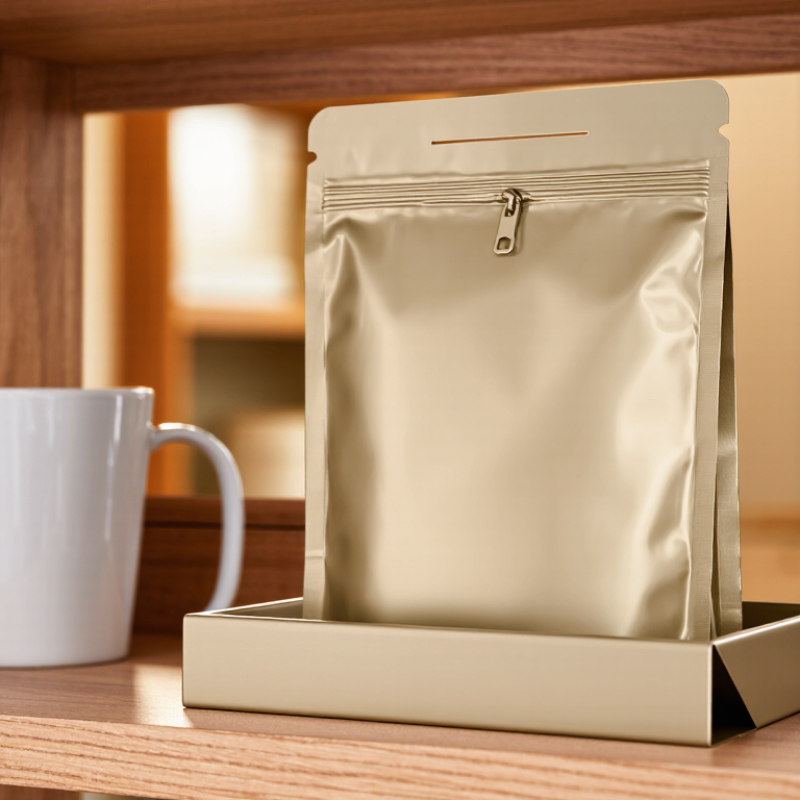
A Flat Bottom Pouch is a flexible package designed to stand upright on a broad, rectangular base. Its bottom gusset opens when filled, while the front, back, and side panels create a stable shape. Picture a pouch of coffee on a kitchen shelf: it can stand without leaning against a jar. That practical detail helps with display, storage, and everyday handling.
An illustrative packaging specialist, Maya Chen, sums up the design trade-off this way: “A stable base earns shelf space, but the whole pack still has to work in the filling line.” That is a useful lens, not a verified quotation from a named industry source. Flat bottom pouches often suit products such as coffee, snacks, pet food, and powdered goods. Depending on the design, they may include resealable closures, valves, or transparent windows. Material choice matters, too. A pouch must protect its contents and suit its sealing and filling process. Looks matter. Function matters more.
Not every pouch performs equally. A heavy product can stress seams, and a broad base alone does not guarantee stability. That part is easy to overlook. Seal quality, dimensions, material structure, and filling conditions all deserve attention. A Flat Bottom Pouch can offer a neat shelf presence, but it is not automatically the best format for every product. Some choices only become clear after testing. This guide explains how the structure works, what features to compare, and where practical trade-offs may appear.
Definition and Key Features of a Flat Bottom Pouch
A flat bottom pouch is a flexible package with a rectangular base and side gussets. When filled, the base opens into a stable footprint, helping the pouch stand upright on a shelf. It typically has front, back, and side panels, offering a broad area for product information. The name can vary a little between suppliers. It is still flexible packaging, not a rigid carton.
Its defining feature is the gusseted base. Folded material spreads beneath the product’s weight, while sealed edges help the pouch keep its shape. Some designs add a resealable zipper, tear notch, or one-way valve. These are optional features, not part of the basic definition. Laminated films can combine printability with moisture or puncture resistance. The level of protection depends on the material layers and seal quality. A pouch may look sturdy but still fail if its bottom seal is weak. Details matter.
Compared with many stand-up pouches, flat bottom styles have a squarer profile and more shelf contact. This can make them easier to arrange, especially when filled with heavier products. However, extra panels may mean more material and higher production costs. More layers do not automatically mean better protection. Not always. Check the filled pouch on a real shelf, since it may behave differently than a flat sample. Product weight, filling method, and storage conditions should guide the design. There is no perfect format for every product.
How Its Structure Creates Stability and Storage Space
What Is a Flat Bottom Pouch?
A flat-bottom pouch uses a broad, rectangular base with front and back panels and expandable side gussets. When filled, the bottom opens into a level footprint instead of forming a narrow, rounded point. That wider contact area helps the pouch stand upright on a shelf or countertop. The base also gives the contents room to settle across the bottom, rather than crowding into one corner. A pouch filled with coffee, grains, or small dry goods can be easier to store and handle this way. The structure is useful, not magic: a very light or unevenly filled pouch may still tip.
Its shape can make storage space more practical. Flat sides let several pouches sit close together, while the squared base can reduce wasted gaps on shelves. The gussets provide extra volume without requiring a separate rigid container. However, usable space depends on the pouch’s dimensions, material, and seal design. A stiff laminate may hold its shape better than a soft film, though flexibility can make filling easier. Small differences matter. For example, placing heavier contents near the base usually improves balance, while an overfilled pouch may bulge and become less steady.
Tips: Fill evenly and leave room near the top for a clean seal. Set the pouch on a firm, level surface. If it leans, adjust the contents rather than assuming the base is defective.
Common Materials and Layering Options
What Is a Flat Bottom Pouch?
Common Materials and Layering Options
A flat bottom pouch stands upright on a broad, folded base. Its material stack controls stiffness, sealing, and protection from moisture, oxygen, or light. Common combinations include PET/PE for print clarity and sealing, and BOPP/CPP for a crisp feel and reliable heat seals. For stronger light and oxygen barriers, converters may use metallized PET or a thin aluminum-foil layer. EVOH can provide an oxygen barrier in some structures, but its performance depends on the surrounding layers and pouch design. No single stack suits every product.
The Flexible Packaging Association’s 2023 State of the U.S. Industry report put U.S. flexible-packaging sales at about $42.9 billion in 2022. That figure shows the format’s scale, not which laminate is best. In practice, teams match layers to the contents, filling temperature, transport conditions, and shelf-life target. A foil layer can block light well, but it may complicate material recovery. Some mono-material PE or PP designs are intended to improve compatibility with recycling streams, though local collection and sorting matter. There is no perfect stack-up. Testing is still needed.
Tips: Ask for a structure specification and barrier-test results. Check seal strength after filling, not just on an empty sample. A small trial can reveal weak corners or pinholes.
Sources: Flexible Packaging Association, 2023 State of the U.S. Industry; final material suitability should be confirmed through product-specific testing.
What Is a Flat Bottom Pouch? - Common Materials and Layering Options
A flat bottom pouch is a flexible package with a stable, flat base and gusseted sides. Its layered construction can combine printable outer materials, barrier layers, and heat-sealable inner layers. The right structure depends on the product, required shelf life, filling process, and storage conditions.
| Layering option | Typical layer order (outside to inside) | What the materials do | Common applications and considerations |
| PET / PE | Printed or printable PET / PE sealant layer | PET provides a smooth print surface and stiffness; PE forms the heat seals and helps resist moisture. | Suitable for products with modest barrier needs, such as some dry goods. This structure does not provide the high oxygen and light barrier of an aluminum-foil laminate. |
| PET / metallized PET / PE | PET / metallized PET / PE sealant layer | The thin metal coating on metallized PET improves barrier performance and gives the pack a reflective appearance; PE provides the sealable inner surface. | Often considered for snacks, powders, and other dry products needing more protection than a basic PET/PE structure. Its barrier is generally lower than an intact aluminum-foil layer. |
| PET / aluminum foil / PE | PET / aluminum foil / PE sealant layer | PET supports printing and handling; foil provides a strong barrier to light, oxygen, and moisture; PE enables heat sealing. | Used when strong barrier protection is important, including for aroma-sensitive or oxidation-sensitive products. Foil can be damaged by flexing or puncture, so the full package design matters. |
| PET / nylon / PE | PET / nylon (PA) / PE sealant layer | PET provides printability and stiffness; nylon adds toughness and puncture resistance; PE provides heat-sealing and moisture resistance. | May be selected for products with sharper edges or greater handling demands. Nylon is not, by itself, a substitute for a high oxygen-barrier layer. |
| Kraft paper / PET / PE | Kraft paper / PET / PE sealant layer | Paper provides a natural-looking outer surface; PET adds support; PE supports sealing and moisture resistance. | Used when a paper appearance is desired for dry products. Paper alone is not a reliable barrier to moisture, oxygen, or grease; the laminate and seals determine protection. |
| Paper / aluminum foil / PE | Paper / aluminum foil / PE sealant layer | Paper provides an outer printable or tactile surface; foil supplies a strong light, oxygen, and moisture barrier; PE forms the seals. | Combines a paper-based exterior with high barrier protection. The package is a laminate, so its material separation and recycling options depend on local facilities. |
Selection note: Layer names and performance vary with material grade, thickness, seal design, and converting quality. Confirm barrier, seal strength, food-contact compliance, and end-of-life requirements for the specific product and market.
How Flat Bottom Pouches Are Manufactured and Sealed
A flat-bottom pouch is built from flexible packaging film, but its shape depends on several carefully aligned panels. A typical structure has a front, back, side gussets, and a separate bottom panel. The film may use multiple layers to balance strength, barrier performance, and heat sealability. The exact combination depends on the product and its storage needs.
During production, film is unwound and guided through forming equipment. The side gussets fold inward, while the bottom panel is positioned to create a stable base. Sealing jaws then apply controlled heat and pressure to join the layers. Small details matter. Wrinkles, dust, or uneven film tension can leave weak areas, even when a seam looks tidy. In practice, the first machine setup is rarely the final one; operators may adjust alignment and sealing conditions after inspecting early samples.
Pouches can be supplied pre-made or formed, filled, and sealed on one production line. For pre-made bags, filling equipment opens each pouch, adds the measured product, and closes the top seam. The seal needs enough contact to hold, without damaging the film. There is no universal setting: material thickness, line speed, and pouch design all affect the result. Quality checks may include visual inspection, seal-strength testing, and checking that the pouch stands evenly. One imperfect base can make a filled pouch lean, so stability deserves attention too.
Typical Uses Across Industries
Flat-bottom pouches appear in many industries because their broad base helps them stand upright on shelves and countertops. The format also offers a relatively wide front panel for product details and clear viewing windows. Small design choices matter.
In coffee and tea, these pouches can hold roasted beans, ground coffee, or loose-leaf blends. A resealable zipper helps limit exposure to air between servings, though it cannot replace suitable barrier materials or careful storage. Snack makers use similar packs for nuts, dried fruit, and crackers. The flat base keeps the pouch stable in a pantry, while gussets create room for irregular shapes.
Pet-food producers often choose larger versions for kibble and treats. Their upright shape can make pouring easier, but heavy fills put stress on seams and closures. Grain, baking-ingredient, and household-product companies also use the format for items such as rice, flour, or powdered cleaners. Clear labeling and durable seals are especially useful when products are handled repeatedly. Still, a flat bottom is not automatically the best choice: pack size, filling equipment, and product freshness requirements should guide the decision. A pouch that looks neat on a shelf may be awkward to store at home.
What Is a Flat Bottom Pouch? Typical Uses Across Industries
A flat bottom pouch has a stable base that lets it stand upright, with front, back, and gusset panels for product display and packaging.
How to read this chart: Scores are qualitative examples of how well the format’s shelf-standing design and display area suit these applications. They are not market-share figures or measured survey results. Common uses include coffee, snacks, pet food, grains, and powdered products.