A Water Chiller removes heat from water and sends the cooled liquid through air-handling units, fan-coil units, or process equipment. Inside the machine, refrigerant absorbs heat through an evaporator. A compressor raises its pressure and temperature. The condenser then rejects heat outdoors or into a cooling tower. The cycle repeats, quietly but continuously.
This equipment matters because cooling demand is rising worldwide. The International Energy Agency’s report, The Future of Cooling, projects that energy demand for space cooling could more than triple by 2050 without stronger efficiency measures. The U.S. Department of Energy also identifies chillers as major electricity users in commercial buildings. Small efficiency losses become expensive quickly. A dirty condenser tube, incorrect flow rate, or poorly tuned control sequence can increase kW per ton.
Professor Moncef Krarti, an ASHRAE Fellow and building-efficiency researcher, has stated, “Energy efficiency is not a single technology; it is a system decision.” That principle shapes this guide. We will examine vapor-compression and absorption chillers, cooling towers, pumps, compressors, and practical efficiency measurements. COP and kW per ton will appear often, but numbers alone can mislead. A laboratory rating may not match a humid afternoon in a crowded office tower. Real plants are messier. Maintenance records, water quality, load patterns, and operator experience all influence performance. The explanation ahead aims to be technically accurate, yet one caution remains: no Water Chiller works efficiently when the entire cooling system is poorly designed.
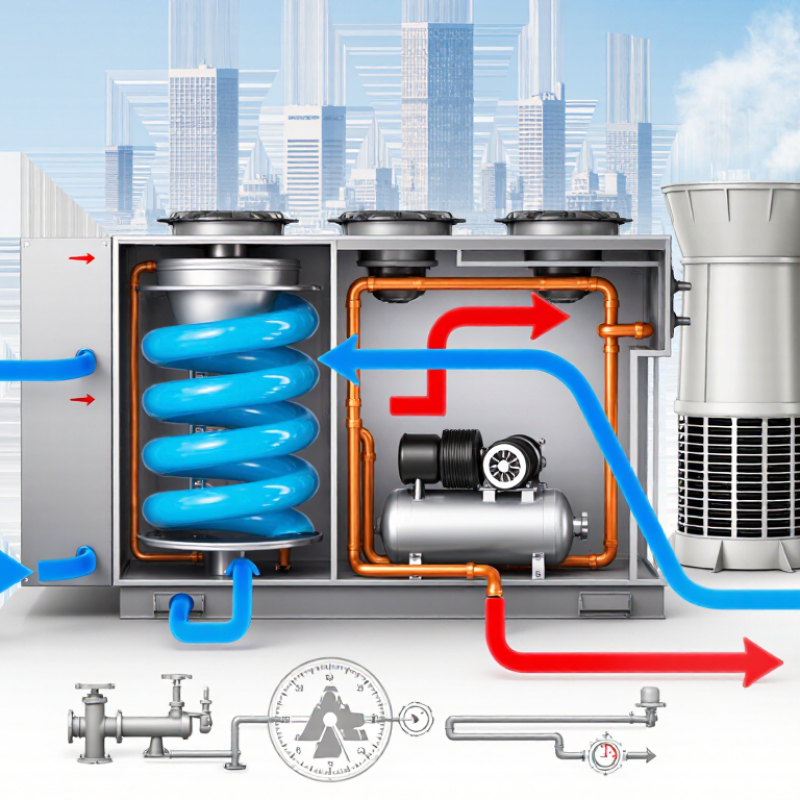
A water chiller is a refrigeration machine that removes heat from circulating water. The cooled water then travels through pipes to air handlers, process equipment, or other heat exchangers. It does not produce “cold” directly. Instead, it transfers unwanted heat away from a building or industrial process.
Inside the chiller, an evaporator absorbs heat from the water. A compressor raises the refrigerant’s pressure and temperature. The condenser releases that heat, while an expansion valve lowers refrigerant pressure for another cooling cycle. Air-cooled chillers reject heat through fans and outdoor coils. Water-cooled models use condenser water and a cooling tower. The correct choice depends on climate, available space, noise limits, and operating demand. A poorly sized chiller may cycle too often, waste energy, or struggle during peak heat. That detail is easy to underestimate.
Tips: Check water flow, filter condition, and temperature readings regularly. Keep condenser surfaces clean. Watch for unusual vibration, rising energy use, or unstable outlet temperatures. A slightly dirty coil can affect performance more than expected. Professional commissioning and scheduled maintenance improve reliability, although real systems rarely perform perfectly every day.

A water chiller removes heat from water through a controlled refrigeration cycle. In a typical system, chilled water flows through an evaporator heat exchanger. Warm process water enters the evaporator and transfers heat to a cold refrigerant. The refrigerant absorbs this heat and changes from liquid into vapor. The cooled water then returns to air-handling units, production equipment, or other cooling loads.
The warmed refrigerant travels to the compressor. The compressor raises its pressure and temperature, creating a high-pressure vapor. This vapor moves through the condenser, where heat leaves the refrigerant.
Air-cooled chillers release heat through fans and outdoor coils. Water-cooled chillers transfer heat into condenser water, which usually moves toward a cooling tower. The refrigerant then passes through an expansion device. Its pressure drops sharply, and it becomes cold enough to repeat the cycle.
The controls keep water temperature and flow within safe limits. Sensors monitor pressure, temperature, and pump performance. Poor flow can cause freezing or unstable operation. Dirty filters can also reduce heat transfer, even when the compressor appears normal. In practical maintenance, checking water quality matters more than many operators expect. Scale forms quietly. It can increase energy use and shorten equipment life. Real systems are not perfectly tidy; unusual noise, uneven temperatures, or repeated alarms deserve investigation rather than a quick reset.

What Is a Water Chiller and How Does It Work?
A water chiller removes heat from water used in buildings, factories, or process equipment. The cooled water circulates through pipes and absorbs unwanted heat. It then returns to the chiller for cooling again. This repeated flow is practical, but not always perfectly balanced.
The main components include the compressor, condenser, expansion valve, and evaporator. The compressor raises the refrigerant’s pressure and temperature. The condenser releases heat to air or cooling water. Next, the expansion valve lowers refrigerant pressure. In the evaporator, the refrigerant absorbs heat from the circulating water. The water pump maintains flow through the system. Sensors and controllers monitor temperature, pressure, and flow. A small sensor problem can create a surprisingly large performance issue.
Tips: Check water flow before blaming the compressor. Inspect strainers, pumps, and filters regularly. Keep condenser surfaces clean. Follow the manufacturer’s service data and use trained technicians for refrigerant work. A simple diagram helps, but real systems often need careful measurements. Track temperature differences over time. They can reveal fouling, low flow, or control problems earlier than noise does.
| Category | Main Component or Stage | Primary Function | How It Works | Important Facts |
|---|---|---|---|---|
| Basic Definition | Water Chiller | Removes heat from water or a water-based fluid and supplies the cooled fluid to a process or building system. | A refrigeration circuit transfers heat from the chilled-water loop to air or condenser water, depending on the chiller design. | Chillers are commonly used for air conditioning, industrial process cooling, data-center cooling, and temperature control. |
| Working Principle | Chilled-Water Loop | Delivers cooled water to heat-exchange equipment or process loads. | A pump circulates chilled water through air-handling coils, fan-coil units, heat exchangers, or process equipment. The water absorbs heat and returns warmer to the chiller. | The loop is generally closed and may contain treated water or a water-glycol mixture where freeze protection is required. |
| Working Principle | Evaporator | Transfers heat from the circulating water to the refrigerant. | Low-pressure refrigerant absorbs heat and evaporates inside the evaporator. The returning water is cooled before it is sent back to the load. | Common evaporator designs include shell-and-tube and brazed-plate heat exchangers. |
| Working Principle | Compressor | Raises the pressure and temperature of the refrigerant vapor. | The compressor draws in low-pressure vapor from the evaporator and compresses it into a high-pressure, high-temperature vapor. | Typical compressor types include scroll, screw, reciprocating, and centrifugal designs. The selection depends on capacity and application requirements. |
| Working Principle | Condenser | Rejects heat from the refrigerant to the surrounding air or condenser water. | High-pressure refrigerant vapor releases heat and changes into a high-pressure liquid. | Air-cooled chillers use fans and outdoor air; water-cooled chillers use condenser water flowing through a separate heat-rejection system. |
| Working Principle | Expansion Device | Reduces refrigerant pressure before the refrigerant enters the evaporator. | The pressure drop lowers the refrigerant temperature and produces a low-pressure mixture of liquid and vapor. | Common devices include thermostatic expansion valves and electronic expansion valves. |
| Refrigeration Circuit | Refrigerant | Acts as the heat-transfer medium within the refrigeration circuit. | The refrigerant repeatedly evaporates and condenses as it moves through the evaporator, compressor, condenser, and expansion device. | The refrigerant must be selected and handled according to equipment design, safety requirements, and applicable environmental regulations. |
| Fluid Circulation | Chilled-Water Pump | Moves chilled water between the chiller and the cooling load. | The pump provides the flow and pressure needed to overcome piping, valve, heat-exchanger, and equipment resistance. | Flow control may use variable-speed operation, two-way valves, three-way valves, or balancing devices. |
| Heat Rejection | Condenser-Water Pump | Circulates condenser water in a water-cooled chiller system. | The pump carries heat from the chiller condenser to a cooling tower or another heat-rejection device. | This component is used in water-cooled systems and is not required for a typical air-cooled chiller. |
| Heat Rejection | Cooling Tower | Rejects heat from condenser water to the atmosphere. | Warm condenser water contacts moving air, allowing a portion of the water to evaporate and remove heat. | A cooling tower is normally part of the system surrounding a water-cooled chiller rather than an internal chiller component. |
| Air-Cooled System | Condenser Fan | Moves ambient air across the condenser coil. | The fan increases airflow over the coil so heat can be transferred from the refrigerant to outdoor air. | Fan speed control can help maintain condensing conditions and reduce energy consumption under partial-load operation. |
| Control and Protection | Expansion and Flow Controls | Regulate refrigerant flow and water flow through the system. | Valves and sensors adjust flow according to load, pressure, temperature, and operating conditions. | Correct flow is important for stable cooling performance and for preventing evaporator freezing or excessive pressure. |
| Control and Protection | Temperature and Pressure Sensors | Monitor operating conditions and provide feedback to the controller. | Sensors measure variables such as entering and leaving water temperature, refrigerant pressure, and ambient conditions. | Sensor readings support capacity control, alarm functions, fault detection, and safe shutdown. |
| Control and Protection | Controller and Electrical Panel | Coordinates operation and protects electrical equipment. | The controller starts or stops compressors, pumps, fans, and valves according to temperature demand and safety limits. | Typical protection functions include overload protection, high-pressure protection, low-flow protection, freeze protection, and phase monitoring. |
| System Performance | Entering and Leaving Water Temperature | Indicates the heat absorbed by the chilled-water loop. | The temperature difference between return water and supply water reflects the cooling load and water-side heat transfer. | Actual operating temperatures vary by application, climate, equipment design, and required process conditions. |
| Maintenance | Water Treatment and Filtration | Reduces corrosion, scale, biological growth, and blockage in water circuits. | Filtration removes suspended particles, while chemical treatment or suitable fluid conditioning controls water quality. | Water quality requirements differ between chilled-water loops, condenser-water loops, and water-glycol systems. |
| Energy Efficiency | Variable-Speed Drives and Capacity Control | Adjusts motor speed or cooling capacity to match the actual load. | The system reduces compressor, pump, or fan output when the cooling demand is lower than the design load. | Energy savings depend on load profile, control settings, system temperatures, maintenance, and installation conditions. |
A water chiller removes heat from circulating water, then sends the cooled water to air-handling units or process equipment. The main types differ by heat rejection method, compressor design, and operating environment. Air-cooled chillers reject heat through outdoor coils and fans. They need less installation infrastructure, but their efficiency can fall during hot weather. Water-cooled chillers transfer heat to a cooling tower. They usually perform better in large facilities, although pumps, water treatment, and tower maintenance add complexity.
Compressor choice also matters. Scroll chillers suit small loads and simpler systems. Screw chillers handle steady medium loads with practical control. Centrifugal chillers often serve hospitals, campuses, and factories requiring high capacity. Absorption chillers use heat instead of conventional electric compression, making them useful where waste heat or steam is available. Evaporative designs can reduce condensing temperatures, but local humidity and water availability limit their value.
The International Energy Agency’s The Future of Cooling report projects global space-cooling energy demand could more than triple by 2050. That pressure makes part-load efficiency important. The U.S. Department of Energy evaluates chillers using kW per ton, a practical measure of electricity consumed per cooling output. Lower is better. ASHRAE guidance also stresses system-level performance, not equipment ratings alone. In real facilities, fouled tubes, oversized pumps, and poor controls can erase expected savings. One type is never best. Even experienced designers can misjudge seasonal conditions.
A water chiller removes heat from water through a refrigeration cycle. A pump sends chilled water through pipes to cooling equipment. Warm return water flows back to the chiller. The system then releases collected heat outdoors or into another water loop. This process supports stable temperatures without placing cooling equipment in every room.
Water chillers are common in office towers, hospitals, hotels, shopping centers, and universities. They serve air-handling units that cool and dehumidify large indoor areas. Manufacturing plants use them for molds, lasers, chemical processes, and temperature-sensitive machinery. Data centers also depend on chilled water to control server-room heat. Food processing facilities and laboratories may require steady cooling for products, tests, or clean environments. Ice rinks sometimes use specialized chilled-water systems beneath the floor. The application changes, but the goal remains similar: remove heat consistently and safely.
Match chiller capacity to the real cooling load, not the building’s maximum guess. Check water quality, pump performance, and condenser airflow regularly. Poor maintenance can reduce efficiency and shorten equipment life. In practice, oversized chillers often cycle too frequently. That wastes energy. I have also found that site conditions matter more than many early plans suggest. Noise, drainage, access space, and seasonal temperatures deserve attention before installation. A technically suitable unit may still perform poorly in a crowded mechanical room.
We offer Packaging Boxes delivered to your door. Secure, professional, and affordable, our custom made packaging boxes are guaranteed to protect and transport your valuable items. Our devoted team is always there to serve you.