Choosing a Level 3 DC fast charging station in 2026 means looking beyond peak power. A charger’s headline rating may reach 350 kW, yet a vehicle can draw less because of its battery, temperature, or state of charge. The useful question is simple: how quickly does it add practical range during a real stop?
The International Energy Agency’s Global EV Outlook 2024 reported that public charging points grew by more than 40% worldwide in 2023. Fast-charger deployment grew even faster, by about 55%. That expansion matters, but it also makes comparisons harder. IEA Executive Director Fatih Birol described the wider shift plainly: “The rise of electric cars is unstoppable.” Charging access will need to keep pace.
For this guide, “top” means more than maximum output. We’ll consider charging speed, connector compatibility, uptime, payment options, site coverage, and the clarity of pricing. A screen that works in rain and a connector that reaches a parked vehicle matter, too. So does dependable service when a busy station develops a fault.
Rankings have limits. A strong network in one region may be scarce elsewhere, and advertised power is not guaranteed at every session. We’ll distinguish reported specifications from real-world considerations, using industry data where available. The result should help drivers and site operators compare options without treating one number as the whole story.
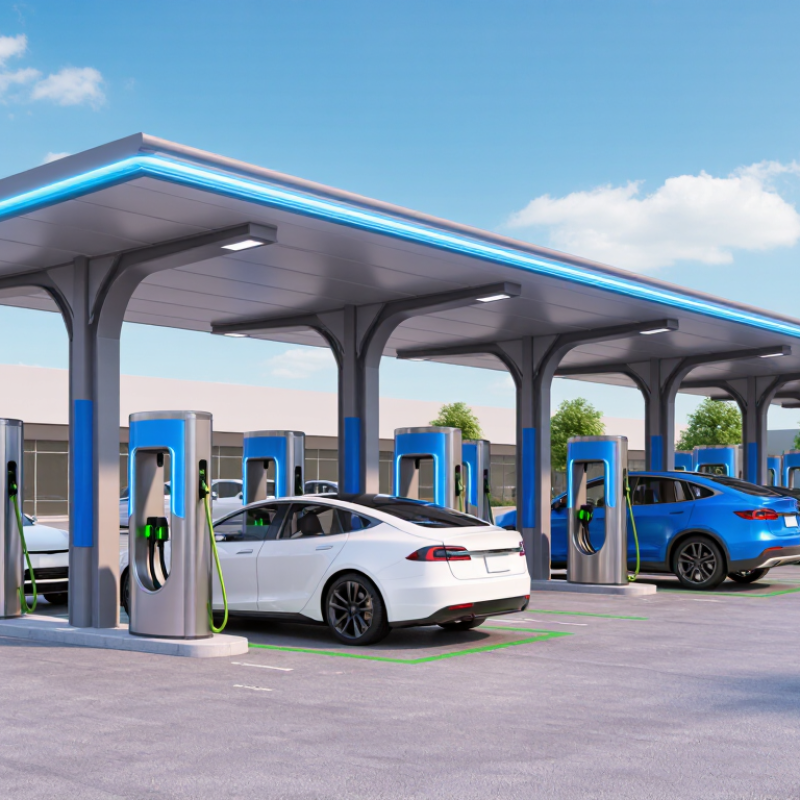
Level 3 usually refers to DC fast charging. Unlike home AC charging, the station converts grid electricity into direct current and sends it to the vehicle’s battery, bypassing the car’s onboard AC charger. The vehicle still controls the process. Its battery management system communicates with the station, setting safe limits for voltage and current.
That exchange happens before full power flows. The station checks the vehicle’s request, then adjusts output as charging continues. A cold battery or a nearly full one may accept less power. So the number printed on a station is a maximum, not a promise. Charging often starts quickly, then slows. That matters.
For example, a driver arriving with a low charge may see high power briefly, while someone arriving at 75 percent may not. Station capacity can also be shared, and cable weight can make the connection awkward in rain or tight parking spaces. It is tempting to judge a charger by its peak rating alone. That misses the battery’s condition, the vehicle’s limits, and the time needed to reach a useful charge. Details vary. A little uncertainty remains, especially when station displays offer limited information.

What Are the Top Level 3 DC Fast Charging Stations in 2026?
Charging Standards, Power Levels, and Connector Types
“Level 3” is a common name for DC fast charging, not a single universal technical standard. In 2026, station compatibility still depends on region, vehicle, and connector. Common options include CCS, NACS (SAE J3400), and CHAdeMO, though availability varies. A plug that looks right may not support your car’s charging protocol. Check first.
Power ratings can range from around 50 kW to 350 kW or more. The highest number on a charger is not a promise of constant speed. Your vehicle’s maximum DC input, battery temperature, and state of charge all affect the rate. For example, a cold battery or a nearly full pack may charge much more slowly. Some stations also share available power between connected vehicles.
Tips: Confirm your vehicle’s connector and supported charging standard before traveling. Check the charger’s rated output, but treat it as a ceiling. Not always. If an approved adapter is needed, verify that your vehicle and the station support that combination. A little planning helps avoid arriving at a fast charger that cannot deliver the connection or speed you expected.

| Charging system or connector | Common market | Typical DC power range | Connector characteristics | Relevant standards and communication | Practical notes |
|---|---|---|---|---|---|
| CCS Type 1 (CCS1) | North America and some other markets | Common public equipment: approximately 50–350 kW | AC connector section plus two large DC contacts; vehicle inlet and station cable must match. | SAE J1772 connector framework; DC communication commonly uses DIN SPEC 70121 or ISO 15118. | Actual charging power depends on the vehicle, battery temperature, state of charge, and station output. |
| CCS Type 2 (CCS2) | Europe and many international markets | Common public equipment: approximately 50–350 kW | Type 2 AC connector section combined with two DC contacts. | IEC 62196 connector standards; DC communication commonly uses DIN SPEC 70121 or ISO 15118. | High-power output is not guaranteed by the connector alone; vehicle capability and station configuration set the limit. |
| SAE J3400 / NACS connector | North America; adoption and vehicle compatibility vary | Public equipment spans a wide range; power is station- and vehicle-dependent. | Compact connector used for both AC and DC charging; compatibility may require a vehicle inlet or approved adapter. | SAE J3400 defines the connector system; charging communication and implementation depend on the vehicle and station. | Check vehicle compatibility, adapter approval, and station access before relying on a particular site. |

| CHAdeMO | Japan and some existing networks elsewhere | Many installed chargers provide approximately 50–100 kW; capabilities vary by generation. | Dedicated DC connector, separate from the vehicle’s AC charging inlet. | CHAdeMO protocol specifications govern communication between vehicle and charger. | Availability is region- and site-dependent; verify connector presence and operational status before travel. |

| GB/T DC | Mainland China | Installed public equipment ranges from lower-power units to high-power systems; output depends on the applicable specification and installation. | Dedicated DC charging connector, distinct from the GB/T AC connector. | GB/T connector and communication standards; the applicable standard edition depends on equipment and vehicle. | Connectors and protocols are market-specific; cross-region use generally requires compatible vehicle equipment. |

| High-power DC charging (power class) | Multiple regions and connector systems | Common power classes include 50 kW, 150 kW, 250 kW, and up to about 350 kW at some public sites. | May use CCS, SAE J3400, or another regionally supported connector. | Power class is not itself a connector or charging protocol standard. | A station’s advertised peak is a maximum capability, not a guaranteed charging rate for every vehicle or session. |

Note: “Level 3” is a common informal term for DC fast charging, not a universally defined power rating. Charging speed varies with vehicle limits, battery condition and temperature, state of charge, cable limits, and shared station capacity.

Leading Level 3 DC fast charging stations in 2026 are defined by more than peak power. Look for dependable uptime, clear pricing, accessible payment, and connectors that match the vehicles using the site. The U.S. Department of Energy’s Alternative Fuels Data Center describes DC fast charging as typically delivering 50 kW or more; newer high-power equipment can offer much higher output. But a car cannot always accept the station’s full rating. Battery temperature and charge level affect speed.
Site design matters in real use. A well-planned station has visible bays, bright lighting, weather protection, and enough space to plug in without moving another vehicle. Reliable status updates help drivers avoid a detour to a broken unit. Small details count. A cable that reaches the charge port easily can make a cold, rainy stop less frustrating. Still, no station is perfect; posted power and real charging speed may differ.
Network growth makes reliability especially important. The International Energy Agency reported that global public charging points grew by 40% in 2023, while fast chargers grew by 55% in its Global EV Outlook 2024. Those figures show rapid expansion, not equal service quality everywhere. When comparing leading stations, check recent uptime data, available power, connector compatibility, and nearby amenities. A high-power cabinet is impressive. A working charger is better.
In 2026, the best Level 3 DC fast-charging station is not always the one with the highest advertised power. A charger rated for 350 kW may deliver less when a vehicle’s battery is cold, nearly full, or limited by its own charging system. Fast on paper. For a fair comparison, check the power your vehicle can actually accept and how long it sustains that rate.
Reliability shows up in ordinary moments: a screen that responds, a cable that reaches the parking space, and a session that starts without repeated attempts. Look for recent station-level uptime information, not just network-wide averages. One caveat: published reliability figures may not reflect the unit you encounter tonight. A well-placed backup station can matter more than a headline speed.
Compatibility includes connector type, vehicle support, and access requirements. Confirm these before a long trip, especially if your vehicle needs an adapter. Cost also deserves a close look: compare per-kilowatt-hour pricing, session fees, idle charges, and any time-based rates. The cheapest listed rate may not produce the lowest final bill. I would hesitate to rank stations from price alone; busy sites, slower charging, or unclear fees can change the real value. Small details matter.
What Are the Top Level 3 DC Fast Charging Stations in 2026?
How to Choose a Station for Different Charging Needs
The right Level 3 station depends on your vehicle, route, and available time. Check your car’s maximum DC charging rate before choosing a high-output charger. A station rated at 350 kW may not charge every vehicle faster than one rated at 150 kW. Your battery’s charging curve matters, too: power often slows as the battery fills. For a quick road-trip stop, compare charger availability, nearby services, and distance from your route. For a regular commute, convenient access may matter more than peak speed.
Tips: Confirm that the connector matches your vehicle, and check recent availability when possible. Leave room for delays. Cold weather, a busy site, or a low-performing unit can change your plans. It is tempting to rank stations by peak kilowatts alone, but that shortcut can mislead.
For a longer stop, look for safe, well-lit locations with restrooms or food nearby. If you mainly need a short top-up, choose a site close to your next turn or destination. Compare pricing and payment options before you arrive, since details can vary by location. No single station is best for everyone. A little extra planning helps, though even careful plans sometimes need adjusting.
We offer Packaging Boxes delivered to your door. Secure, professional, and affordable, our custom made packaging boxes are guaranteed to protect and transport your valuable items. Our devoted team is always there to serve you.