7 Best Digital Signage LED Wall Suppliers Worldwide?
The global demand for vivid, dependable display systems is changing how brands communicate in public spaces. Grand View Research’s 2024 Digital Signage Market report describes continued growth, supported by retail, transportation, hospitality, and corporate installations. MarketsandMarkets also forecasts steady expansion for the LED display market through 2029. The figures vary between reports. Their direction is similar.
A digital signage LED wall is more than a bright screen. It must remain readable under direct sunlight, operate for long hours, and reproduce consistent color across thousands of modules. Pixel pitch matters. So do brightness control, refresh rate, cabinet protection, power efficiency, and front-service access. A narrow-pitch wall may suit a luxury showroom, while a weather-resistant outdoor display needs different engineering.
This guide examines seven notable suppliers worldwide. The comparison considers product quality, manufacturing experience, technical support, warranty clarity, installation capability, and total ownership cost. Information is cross-checked against supplier specifications, independent market research, and practical deployment requirements. Brand reputation alone is not enough.
Real projects expose weaknesses. A screen can look excellent in a showroom, yet perform poorly after months of heat, dust, or uneven calibration. Some suppliers publish impressive specifications but provide limited regional service. That difference deserves attention. It is easy to overlook.
The selected companies represent different strengths, including fine-pitch indoor displays, large outdoor walls, rental systems, and customized installations. Readers should still verify local certifications, replacement-part availability, and service response times before purchasing. No single supplier fits every venue, budget, or viewing distance.
What Is a Digital Signage LED Wall and How Does It Work?
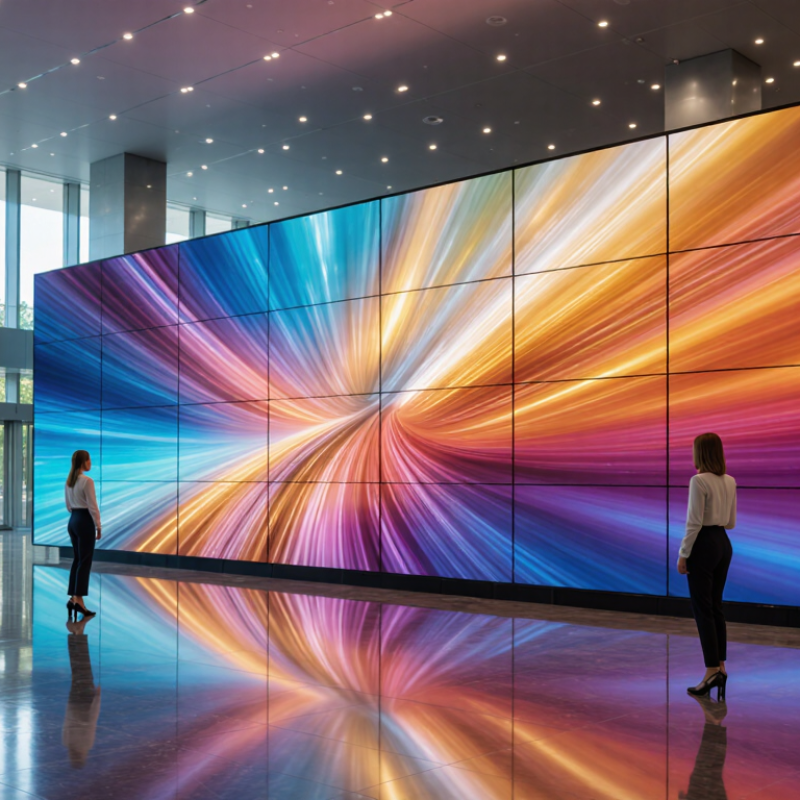
A digital signage LED wall is a large, modular display built from light-emitting diode cabinets. Each cabinet contains LED pixels, receiving cards, power supplies, and structured data connections. A media player sends video to a controller, which distributes image data across the wall. The controller maps pixels, corrects timing, and maintains color consistency between cabinets. Content usually travels through a content management system before appearing as scheduled video, graphics, or live information. It is a coordinated chain. Unlike an LCD, an LED wall produces light directly, helping it remain visible in bright entrances and outdoor environments.
Pixel pitch matters. A 2.5-millimeter pitch places pixels closer together than a 6-millimeter pitch. It improves close-viewing detail but increases cost. MarketsandMarkets estimated the digital signage market at about 27 billion dollars in 2023. Its report projects approximately 44 billion dollars by 2028. Grand View Research also forecasts strong growth, although its figures differ because market definitions vary. That difference deserves attention.
Installers should match pitch to viewing distance, brightness to ambient light, and refresh rate to camera use. A reception wall may need fine pitch and restrained brightness. A stadium display needs distance readability and weather protection. Peak power is not daily power. I have seen proposals confuse them. Ask suppliers for measured consumption, ingress protection evidence, calibration records, spare-module policies, and independent test documents. The most impressive specification is not always the most useful one.
Key Factors for Evaluating LED Wall Suppliers Worldwide
Choosing among the seven best digital signage LED wall suppliers worldwide requires more than comparing prices. Start with display performance, including pixel pitch, brightness, refresh rate, color consistency, and viewing distance. A fine-pitch wall may look sharp indoors but waste energy outdoors. Ask for measured test results, not only catalog promises.
Supplier reliability matters just as much. Review production experience, quality-control procedures, component traceability, warranty terms, spare-part availability, and local technical support. Request project references with similar screen sizes and climates. Confirm delivery schedules, installation training, packaging standards, and compliance documentation. A supplier should explain failure rates clearly. Vague answers deserve caution. A low quote can still be useful, but only after comparing total ownership costs.
Tips: Request a live demonstration or sample cabinet before signing. Check cabinet alignment, service access, cable design, and brightness control in person. Ask how quickly replacement modules arrive in your region. Independent certifications can strengthen trust, but they do not replace factory inspection. Consider content-management compatibility and remote monitoring, too. These details are easy to overlook. I have seen evaluations focus heavily on image quality while ignoring maintenance access. That mistake becomes expensive when a screen is mounted above a busy entrance. Supplier selection is therefore a balance between visible performance, documented evidence, responsive support, and realistic long-term maintenance.
Seven Leading Digital Signage LED Wall Suppliers
The seven leading digital signage LED wall suppliers worldwide are distinguished by engineering depth, not flashy catalogs. One specializes in fine-pitch indoor walls for control rooms. Another builds high-brightness outdoor displays for direct sunlight. A third produces rental cabinets with quick-lock frames and reinforced corners. The fourth supplies curved panels for retail interiors. The fifth integrates media players, monitoring software, and remote diagnostics. The sixth supports stadium-scale installations with weather-rated modules. The seventh serves regional projects through local manufacturing and trained installation partners.
Experienced buyers examine more than pixel pitch. They check brightness stability, refresh rate, grayscale performance, cabinet weight, and spare-part availability. A reliable supplier provides sample testing, calibration records, wiring diagrams, and clear warranty terms. Ask how failed modules are replaced at ceiling height. That answer reveals practical experience. Front-service access can reduce maintenance time in busy transit halls. For outdoor walls, inspect drainage paths, thermal design, ingress protection, and wind-load documentation. Certifications should be verified for the destination market, not accepted as vague claims.
Site conditions still change the decision. A technically strong supplier may lack dependable local support. That matters. In field reviews, projects are sometimes delayed by missing receiving cards, not damaged LEDs. Supplier comparisons should include installation training, response times, spare inventory, and commissioning support. No supplier gets every detail right. The strongest choice documents limitations honestly and adapts the display to viewing distance, content schedules, and maintenance realities.
7 Best Digital Signage LED Wall Suppliers Worldwide
Common pixel-pitch options used when evaluating digital signage LED wall suppliers
Smaller pixel pitches generally provide sharper images at close viewing distances, while larger pitches are commonly selected for distant viewing and larger-format installations. Actual supplier offerings, brightness, refresh rate, service coverage and warranty terms should be verified before purchasing.
Comparing Product Quality, Technology, Pricing, and Support
Choosing among the seven best digital signage LED wall suppliers worldwide requires more than comparing website images. Product quality starts with pixel consistency, cabinet accuracy, weather protection, and service access. Ask for brightness data, refresh rates, viewing angles, and maintenance procedures. A reliable supplier should provide test reports, spare-part guidance, and clear warranty terms. Check a live installation, not only a showroom sample. Small color differences can become obvious across a large wall.
Technology also affects long-term value. Fine-pitch displays suit close indoor viewing, while higher brightness helps outdoor screens handle direct sunlight. Front-service cabinets can reduce maintenance time in crowded venues. However, advanced features may add cost without improving your actual audience experience. Pricing should include controllers, shipping, installation, calibration, software, and replacement modules. The cheapest quotation is rarely the cheapest project. A slightly higher initial cost may reduce repairs, energy use, and downtime.
Tips: Request a sample cabinet before signing. Compare power consumption at normal brightness, not peak output. Ask how quickly technical support responds across your time zone. Read warranty exclusions carefully. Suppliers should explain control-system compatibility in plain language. Be cautious when specifications look unusually perfect; measurement methods can differ. I would also leave room for uncertainty, because installation conditions often change the original estimate. A supplier that admits limitations may prove more dependable than one promising everything.
How to Choose the Right LED Wall Supplier for Your Project
Choosing an LED wall supplier starts with your project conditions, not a product catalog. Measure viewing distance, wall size, ambient light, and content type. A supplier should recommend pixel pitch based on these details. The largest display is rarely the best choice.
Ask for a working demonstration. Inspect color consistency, refresh rate, cabinet alignment, and brightness control. Indoor venues need comfortable brightness, while outdoor screens require weather protection and stronger structural planning. Request test reports, safety certifications, warranty terms, and written maintenance procedures. Reliable suppliers explain technical limits clearly.
Service quality often decides long-term value. Confirm installation experience, spare-part availability, remote support, and response times across your region. Ask for references from projects with similar dimensions and operating hours. Review the quotation carefully; shipping, control systems, mounting, calibration, and replacement modules may be excluded. My first supplier comparison focused too heavily on price. That was a mistake. A lower quote can become expensive after one failed module or delayed repair. Also, do not trust polished case studies alone. Request recent photos, operating data, and a live video inspection when visiting is impossible. A supplier that welcomes difficult questions usually understands the work better.