7 Tips for Buying Eco Friendly Cosmetic Containers Wholesale
Choosing Eco Friendly Cosmetic Containers Wholesale is not just a materials decision. It affects product protection, shipping costs, shelf appeal, and how credible your sustainability claims appear. A jar that looks responsible can still create problems if its pump is difficult to separate or its material is not accepted locally. Details matter.
The scale of plastic waste gives this choice context. The OECD’s Global Plastics Outlook reported that the world generated 353 million tonnes of plastic waste in 2019, and only 9% was recycled. That matters. Cosmetic brands cannot solve the whole problem through packaging alone, but they can ask better questions about material content, recyclability, and verified supplier claims.
Consumer demand also deserves attention, with careful interpretation. Trivium Packaging’s 2023 Global Buying Green Report surveyed 9,000 consumers across nine countries. It found that 82% said they were willing to pay more for sustainable packaging. That signals interest, not guaranteed sales. A thoughtful wholesale decision still depends on your formula, budget, order volume, and local disposal systems.
The seven tips ahead focus on practical checks: comparing glass, recycled plastics, and refillable formats; requesting material specifications; confirming minimum order quantities; and testing containers with your actual product. A lotion may leak through a closure that worked perfectly with a thicker cream. Small trials help reveal such mismatches before a large purchase. Even then, no container is perfect. The goal is a defensible choice supported by evidence, not a green-sounding label.
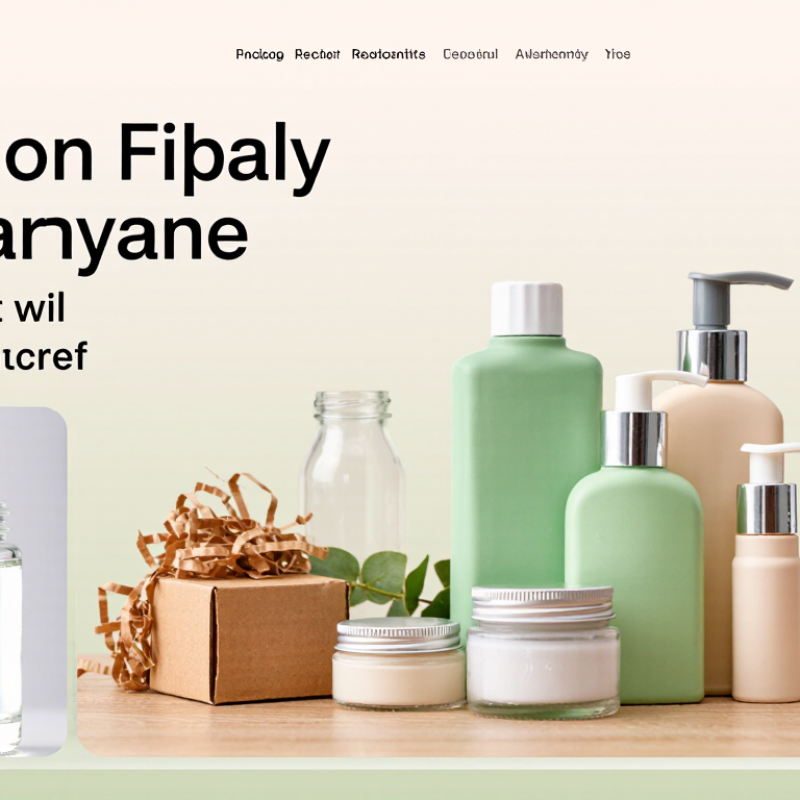
Understanding Eco-Friendly Cosmetic Containers and Wholesale Options
Eco-friendly cosmetic containers are packaging choices evaluated across sourcing, product use, and end-of-life—not a single material category. Wholesale options commonly include glass jars, aluminum tins, recycled-content plastic, and refillable formats. The Ellen MacArthur Foundation’s 2016 New Plastics Economy report estimated that packaging accounted for 26% of global plastic use. OECD’s 2022 Global Plastics Outlook reported that just 9% of plastic waste was recycled in 2019. Small details matter.
Each option has trade-offs. Glass feels substantial and protects many formulas, but its weight can increase shipping impacts and breakage risk. Recycled plastic may reduce demand for virgin material, yet color, odor, and supply consistency can vary. “Recyclable” on paper does not guarantee local collection or processing. I still find that distinction easy to overlook.
Wholesale buying adds practical choices: minimum order quantities, decoration methods, lead times, and sample availability. Request material specifications and recycled-content documentation, then test samples with the actual formula and closure. Check for leaks, pump performance, and whether labels separate cleanly. Ask suppliers about repeat-order consistency, too. A lower unit price may look appealing, but excess stock or incompatible packaging can erase the savings. Refill systems sound promising, though customers may not reuse them as often as planned.
7 Tips for Buying Eco-Friendly Cosmetic Containers Wholesale
Understanding Eco-Friendly Cosmetic Containers and Wholesale Options
Approximate material density: polypropylene (PP), 0.90 g/cm³; high-density polyethylene (HDPE), 0.95 g/cm³; polyethylene terephthalate (PET), 1.38 g/cm³; and soda-lime glass, 2.50 g/cm³. Density alone does not determine environmental impact—also compare container weight, recycled content, reuse options, and local recycling access.
Comparing Sustainable Materials and Packaging Formats
Choosing wholesale cosmetic packaging means comparing material and format together. A recyclable material can still perform poorly if its shape, coating, or pump is hard to separate. Glass feels substantial and protects many formulas, but it is heavy to ship and can break. Aluminum is light and opaque, making it useful for light-sensitive products; liners and closures still affect recyclability. Recycled-content plastic can reduce demand for virgin resin, though local collection systems may not accept every resin or color. Check supplier specifications, not just the word “eco.”
Format changes the footprint too. Airless pumps can limit product exposure and dispense thick lotions, but mixed-material pumps complicate sorting. Wide-mouth jars are easy to refill and clean, yet fingers can introduce contamination, and customers may leave product behind. Tubes use little material and travel well; laminated layers can make recycling difficult. Refill pouches often use less packaging per refill, but only help when customers reuse a durable outer container and local facilities can process the pouch.
For wholesale trials, request samples and test leakage, drop resistance, label adhesion, and dispensing with the actual formula. Small details matter. Compare shipping weight, minimum order quantities, and whether components separate easily. Ask for documented recycled-content percentages and material breakdowns. One easy mistake is choosing by a sustainability claim alone. A lighter pack may reduce transport weight, while an incompatible pump can undermine its end-of-life plan. Choose packaging that protects the formula and fits local recycling or refill habits without excess material.
Matching Containers to Cosmetic Formulas and Product Needs
A container is part of the formula system, not just its outer shell. Match viscosity to the closure: thick balm may need a wide-mouth jar, while a light serum often needs a pump that delivers a steady dose. Check the formula against the container material, liner, and dispensing parts. Oils can soften some plastics, and strong fragrances may affect seals. Test it first. Fill samples and store them upright and on their sides. Look for leaks, odor changes, discoloration, paneling, and uneven dispensing.
Eco-friendly claims need practical checks. The OECD’s Global Plastics Outlook reports that only 9% of global plastic waste was recycled in 2019; the figure covers all plastic waste, not cosmetics packaging specifically. The Ellen MacArthur Foundation’s 2016 New Plastics Economy report found that just 2% of plastic packaging was recycled into packaging of similar quality. These findings make design choices important, but a recyclable label alone is not enough. For wholesale orders, confirm the exact resin and recycled-content documentation, then check whether local collection systems accept that format. Small details matter. A dark, multi-material pump may protect a light-sensitive formula, yet complicate recycling. Glass may suit some serums, but its weight and breakage risk can increase shipping impacts. Request production samples before committing to a large run; compatibility can vary between batches, and that uncertainty deserves honest attention.
Checking Supplier Standards, Certifications, and Quality
When buying eco-friendly cosmetic containers wholesale, check how a supplier supports its environmental claims. Ask for current certificates and confirm which materials, facilities, or processes they cover. A certificate may not apply to every product in a catalogue. Check its issuing body, scope, and expiry date, then compare those details with the container you plan to order. Clear answers matter. Vague claims deserve another question.
Tip: Request a material specification sheet, test reports, and a sample from the same production line as your intended order. Check wall thickness, cap fit, label adhesion, and leakage after filling. Keep your own notes, including what failed. Small defects can become costly across a large shipment.
Review the supplier’s quality controls, too. Ask how incoming materials are inspected and how production batches are tracked. Find out what happens when a batch misses agreed specifications. A reliable supplier should explain its process and provide records without making every answer feel like a negotiation. Paperwork is useful, but it is not the package. Test the container with your formula, since oils, creams, and repeated handling may reveal problems that a quick visual check misses. Some checks take time, and that can delay purchasing. Still, rushing past an unclear quality record is a risk worth questioning.
Evaluating Wholesale Pricing, Minimum Orders, and Shipping
Wholesale pricing is rarely just the cost per jar. Ask suppliers to separate the container, cap, liner, printing, setup, and sample charges. Then compare quotes at the same order volume. A low unit price can hide costly decoration or oversized cartons. Get samples first. Check the wall thickness, closure fit, and how the container feels in a wet hand. I would not assume that a recycled-content claim means every component is recyclable; ask for material details in writing.
Minimum order quantities can tie up cash and storage space. Request price breaks at several quantities, such as 1,000, 3,000, and 5,000 units, and ask whether mixed sizes qualify. The OECD’s Global Plastics Outlook (2022) estimates that packaging accounted for 40% of plastic waste generated in 2019. That makes material choices worth checking, but a small order that requires frequent shipments may complicate the footprint. There is no perfect answer. Recheck the trade-off against your actual sales pace.
Shipping can change the real wholesale cost. Request carton dimensions, gross weight, pallet details, dispatch location, and an estimate of delivery charges before placing an order. Compare the delivered cost per usable container, not just freight per carton. U.S. EPA’s 2018 Facts and Figures report says containers and packaging represented 28.1% of U.S. municipal solid waste. Ask whether cartons can be packed efficiently without risking cracks or crushed caps. Confirm lead times and what happens if a shipment arrives late or damaged; those details are easy to overlook.