






































































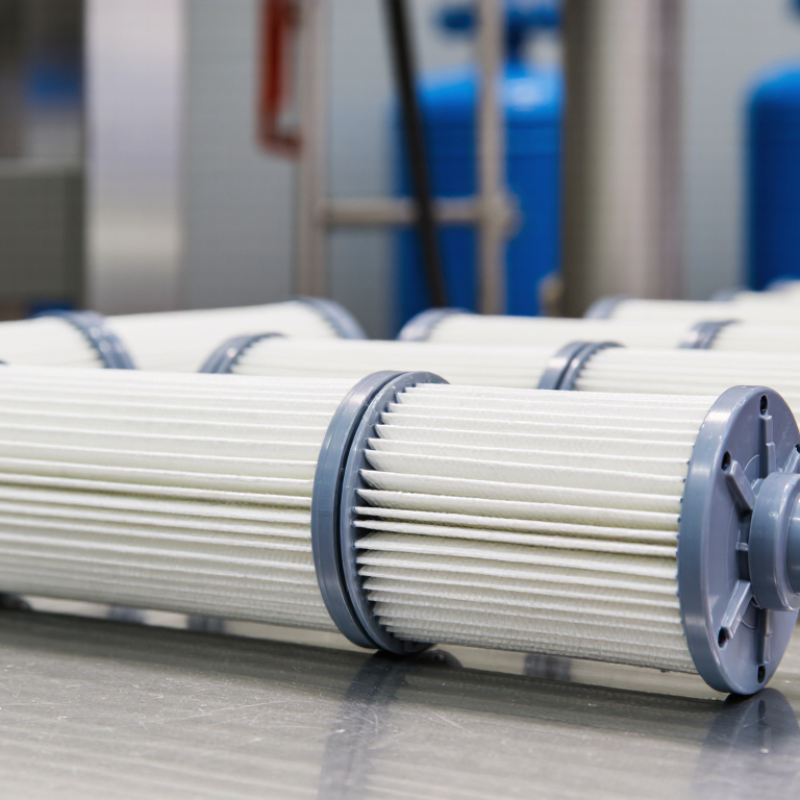
High flow filter cartridges clean large liquid volumes through a wider, deeper media structure. Unlike standard cartridges, they often use fewer elements with larger diameters. This reduces housing space, labor, and sealing points. The exact capacity depends on viscosity, particle load, temperature, and membrane material. A published 2024 industrial filtration market report estimates continued growth as water reuse and process manufacturing expand. Market growth alone, however, does not guarantee correct sizing.
How do they work?
Contaminated liquid enters the cartridge housing and moves across pleated or layered media. Particles become trapped on the surface and inside the media pores. Clean liquid then exits through the central core. As dirt accumulates, differential pressure rises. Operators monitor this pressure instead of guessing replacement time. A 0.7-bar increase is often treated as a practical changeout signal, but each process needs validation.
ISO 16889 uses the beta ratio to describe particle removal efficiency. For example, β5 = 5,000 means only one particle passes downstream for every 5,000 particles entering at the tested size.
That figure is useful, but it is not a promise under every operating condition. Field flow may fluctuate. Temperature may drop. The cartridge may load unevenly. A 2023 water-treatment industry report also identifies energy use and maintenance as major operating concerns, making lower pressure drop increasingly valuable. In practice, a cartridge that lasts longer but creates excessive resistance may be the wrong choice. The numbers need questioning.