Menu
Close
Choosing the best Weightlifting Belts in 2026 requires more than comparing thickness, color, and price. A reliable belt should support controlled bracing during heavy squats, deadlifts, and presses. It should also match your training style, body shape, experience, and lifting goals.
Fit matters immediately. The belt should feel firm around your abdomen without restricting normal breathing. Too loose. It will not provide consistent feedback. Too tight. It may distract you before the bar leaves the floor. A four-inch leather belt can offer strong support for experienced powerlifters, while a narrower or flexible model may suit Olympic lifting and mixed training better.
This guide examines belt materials, widths, fastening systems, durability, comfort, and manufacturer sizing information. It also considers practical details, such as whether the buckle digs into your ribs or whether the belt shifts during repeated sets. Evidence does not support treating a belt as a substitute for sound technique, progressive programming, or professional coaching. That point is easy to overlook.
Personal preference remains important. Some lifters brace better with a stiff leather belt, while others move more naturally with a flexible nylon design. Testing a belt under manageable loads can reveal problems that product photos hide. Reviews can help, but they are not always consistent or independently verified. The goal is a balanced decision based on construction quality, appropriate fit, honest user experience, and safety-minded lifting habits.
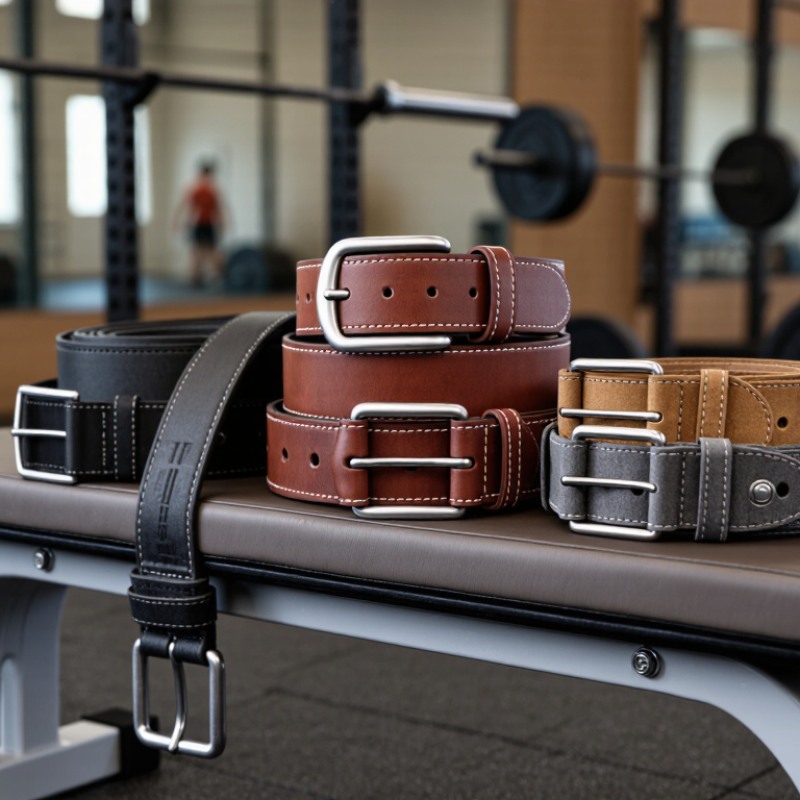
A weightlifting belt is not a back brace or a shortcut to better technique. It gives your trunk a firm surface to brace against, helping you create intra-abdominal pressure during heavy squats, deadlifts, and presses. Research published in Medicine & Science in Sports & Exercise found that belts can increase abdominal pressure during lifting. However, pressure is not the same as guaranteed injury prevention. The evidence remains mixed.
Who should use one? Experienced lifters handling near-limit loads may benefit most. A belt can improve confidence and help maintain a rigid torso when fatigue appears. Beginners often need more practice without one. They must learn breathing, bracing, hip control, and safe load selection first. The National Strength and Conditioning Association advises treating belts as performance tools, not replacements for coaching. ACSM’s 2025 Worldwide Survey also shows traditional strength training remains a major fitness trend, bringing more new lifters into weight rooms.
Tips: Choose a belt that feels firm, not painful. A wider model may support squats, while a slimmer design can suit deadlifts. Tighten it so you can breathe and brace. Test it with warm-up sets. If your ribs bruise, your breathing changes, or your technique worsens, loosen it. I sometimes see lifters wear belts for every set. That habit deserves reconsideration. Use the belt when the demand justifies it. Keep building strength without depending on it.
| Belt Type | Typical Width and Thickness | Primary Function | Best-Suited Lifts | Recommended User | Advantages | Limitations and Safety Notes |
|---|---|---|---|---|---|---|
| General-purpose leather belt | Approximately 10 cm wide; commonly 10–13 mm thick | Provides firm, even support around the trunk and gives the abdomen a surface to brace against | Squats, deadlifts, rows, presses, and other compound lifts | Beginner to advanced lifters seeking one versatile belt | Durable, stable, and suitable for many training styles | Can feel stiff when new. It should fit snugly without restricting normal breathing or hip movement. |
| Powerlifting belt | Usually a consistent 10 cm width; commonly 10–13 mm thick | Maximizes abdominal bracing and trunk rigidity during very heavy attempts | Heavy back squats, deadlifts, and bench press setups | Experienced lifters training near maximal loads | Uniform support from front to back and excellent resistance to bending | May limit comfort and mobility for Olympic lifts, high-repetition work, and dynamic exercises. |
| Weightlifting belt | Commonly wider at the back and narrower at the front; often about 10–13 mm at the back | Supports bracing while allowing greater hip and torso movement | Clean and jerk, snatch, front squats, and overhead squats | Olympic weightlifters and athletes who need mobility | Balances support with flexibility and is less intrusive during receiving positions | Usually provides less uniform abdominal support than a rigid powerlifting belt. |
| Tapered leather belt | Often about 10 cm at the back and 5–7.5 cm at the front; thickness varies | Offers lower-back and abdominal support while leaving more room for hip flexion | Squats, deadlifts, kettlebell work, and mixed strength training | Lifters who prioritize comfort and movement | More comfortable for sitting, bending, and exercises requiring torso angle changes | Provides less front-body contact and may feel less stable under maximal loads. |
| Nylon or fabric belt | Usually narrower and thinner than leather; width and padding vary by design | Provides light-to-moderate compression and a reminder to brace | Moderate-load squats, deadlifts, machines, carries, and general fitness training | Beginners, recreational trainees, and athletes needing flexibility | Lightweight, adjustable, breathable, and comfortable for longer sessions | Typically offers less rigid support and may not be ideal for repeated near-maximal attempts. |
| Lever-fastened belt | Available in several widths and thicknesses, commonly 10 cm wide | Creates consistent tension and can be secured or released quickly | Heavy squats, deadlifts, and structured strength sessions | Lifters who want repeatable tightness between sets | Fast operation and consistent fit once adjusted correctly | Less convenient for frequent size changes; the mechanism must be maintained and fitted properly. |
| Prong-fastened belt | Commonly 10 cm wide; thickness often ranges from 6–13 mm | Provides adjustable, dependable support through a pin-and-hole closure | Most strength-training movements, including heavy compound lifts | Most users who want adjustability and long-term durability | Simple construction, multiple adjustment positions, and no mechanical lever to maintain | Changing tightness can take longer, especially between warm-up and heavy sets. |
| Best choice by training goal | Match width and thickness to the required stability, not to appearance alone | Improves bracing by increasing feedback against which the abdominal muscles can contract | Choose a rigid belt for maximal strength; a flexible belt for varied or high-mobility training | Anyone who can brace correctly and has a clear training need | Helps organize technique and may improve confidence under heavy loads | A belt does not replace progressive programming, proper breathing, sound technique, or medical advice. |
| Fit and sizing checklist | Measure around the area where the belt will sit, following the maker’s sizing method | Ensures stable contact without excessive pressure or unwanted movement | Test the fit in the actual lifting position, especially at the bottom of a squat | Every belt user | A correctly fitted belt is more comfortable and less likely to interfere with technique | Do not wear it so tightly that it causes numbness, sharp pain, reflux, dizziness, or restricted breathing. |