Menu
Close
A shipping box is often the first physical conversation between a brand and its customer. It arrives at the doorstep, under bright hallway lights, before the product is even seen. That moment matters. In 2023, the U.S. Census Bureau reported that U.S. retail e-commerce sales reached approximately $1.1 trillion, creating more opportunities for packaging to shape brand perception. Cute shipping boxes can make that first impression warmer, more memorable, and easier to share online.
Looks matter. Fit matters more. A box that photographs beautifully but wastes space may increase material use, dimensional-weight charges, and product movement during transit. The Sustainable Packaging Coalition recommends evaluating packaging through material efficiency, recovery, and practical performance, not appearance alone. McKinsey’s global packaging research also found that 60% to 70% of consumers may pay more for sustainable packaging, although preferences differ by market, age, and product category. Data helps, but it does not replace testing.
Choosing the right design requires more than selecting pastel colors or playful illustrations. Brand recognition, box strength, opening experience, print quality, and recyclability must work together. DHL’s E-Commerce Trends research repeatedly identifies delivery experience and sustainability as important customer concerns. Still, not every “eco” claim is equally reliable. Suppliers should provide clear material specifications and credible certifications where relevant. This guide explores seven practical tips for choosing cute shipping boxes without sacrificing protection, efficiency, or trust. Some choices will remain imperfect. That is normal. A charming box can still fail if its corners crush, its insert rattles, or its size feels excessive. Careful sampling, drop testing, and customer feedback can turn attractive packaging into dependable brand experience.
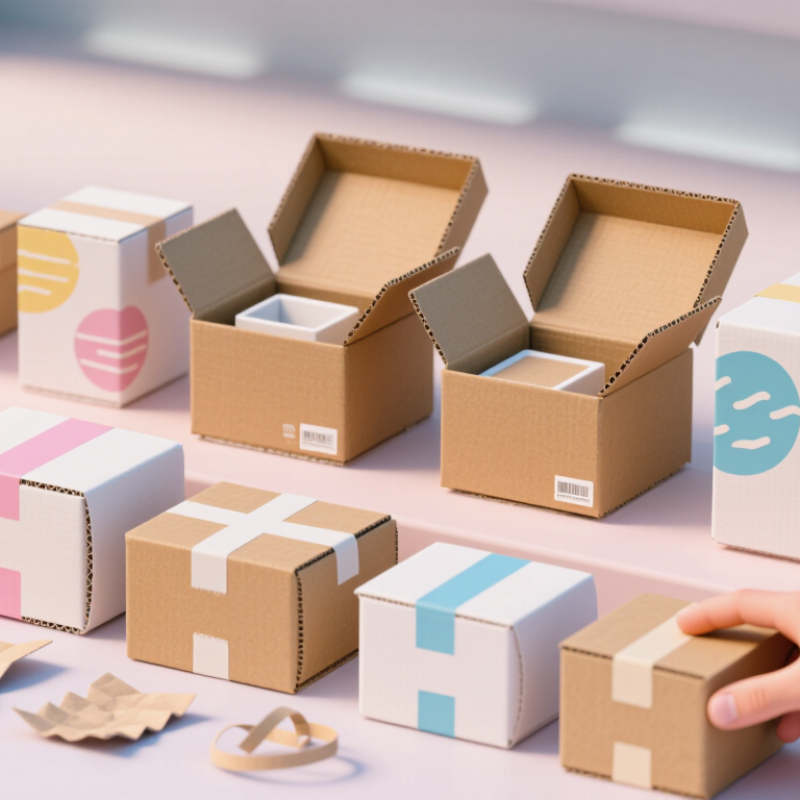
Cute shipping boxes work best when they express a clear brand personality, not just a decorative color. Start by defining your packaging style through three choices: color temperature, illustration style, and emotional tone. Soft pastels may appeal to gift buyers, while bold contrast can suit playful, trend-focused customers. Your box should feel recognizable before the label is read.
Study your target customer’s buying context. A 2023 global packaging study surveyed 6,000 consumers across 11 countries and found recyclability ranked among the most important packaging attributes. Another 2024 consumer survey reported that 46% of shoppers were buying more sustainable products. Cute design still needs practical proof. Use recyclable paperboard, low-ink printing, and a box size that protects the product without excessive empty space. Measure the package against the item. A loose box can make a small purchase feel careless.
I once chose an overly sweet palette. It looked charming, but it excluded customers seeking a more modern feel. That mistake changed my process. I now test two or three mockups with real customers before ordering cartons. Ask what they notice first, what feels trustworthy, and whether the box matches the product’s price. Keep the answers, not your assumptions. A small thank-you message, a neat tissue fold, or a simple line drawing can create warmth without making the package childish. Test opening, storage, and disposal too. Beauty that creates inconvenience is not a strong brand experience.
| Tip | Target Customer Signal | Recommended Box Style | Practical Specification | Visual Direction | Selection Check |
|---|---|---|---|---|---|
| 1 | Customers who value soft, cheerful, and gift-ready presentation. | Pastel mailer box | E-flute corrugated board Typical thickness: about 1.5 mm. |
Use two or three light colors, rounded graphic elements, and a simple exterior pattern. | Confirm that the design remains readable in natural light and does not make shipping labels difficult to place. |
| 2 | Minimalist shoppers who prefer clean design and low visual clutter. | Single-color kraft box | Kraft corrugated board Choose a snug internal fit to reduce empty space. |
Pair the natural brown surface with one ink color, a small logo area, and limited decorative details. | Check that the ink contrast is strong enough for easy reading on the kraft surface. |
| 3 | Eco-conscious customers who look for practical packaging choices. | Paper-based recyclable box | Avoid unnecessary mixed materials Use paper tape or a paper-based closure where suitable. |
Communicate material facts clearly instead of relying only on green color cues. | Verify local recycling guidance because accepted materials and collection systems vary by location. |
| 4 | Customers buying small accessories, stationery, cosmetics, or other lightweight items. | Compact tuck-end mailer | Example internal size: 8 × 6 × 2 in Approximately 20.3 × 15.2 × 5.1 cm. |
Use a neat front panel, a short message inside the lid, and a small accent color. | Measure the packed product, add protective clearance, and test whether the lid closes without pressure. |
| 5 | Customers who enjoy unboxing content and visually shareable details. | Printed interior mailer | One exterior color plus interior print Keep the main artwork away from fold and glue zones. |
Place the strongest visual message inside the lid so it appears after opening. | Request a physical prototype to review color, fold alignment, print coverage, and opening sequence. |
| 6 | Value-focused customers who prefer attractive packaging without excessive cost. | Standard-size printed shipper | Use common box dimensions Limit special finishes, inserts, and custom structural parts. |
Make one design feature distinctive, such as a bright inner panel or a simple repeating pattern. | Compare total packed cost, including box, protective fill, tape, labor, storage, and shipping dimensional weight. |
| 7 | Customers who expect dependable delivery and a polished first impression. | Reinforced protective mailer | Select board strength for product weight Add cushioning when the product is fragile or has sharp edges. |
Keep the exterior attractive but prioritize secure closure, clean edges, and damage-resistant construction. | Perform a packed-box drop and compression test before ordering in quantity; packaging performance depends on product weight and distribution conditions. |
Note: Box dimensions and board specifications are practical starting points rather than universal requirements. Final selection should be confirmed through a physical sample and shipping test using the actual product.