
How to Choose a Type 1 or Type 2 Charging Cable?

Choosing the right Type 1 or Type 2 charging cable can seem simple, but connector details matter. A cable that fits your car may not suit every public charger, wall box, or electrical supply. The correct choice depends on your vehicle inlet, charging station socket, region, and required power rating.

In practical use, Type 1 connectors are commonly associated with many vehicles from North America and Japan. Type 2 connectors are widely used across Europe and other markets. However, regional patterns are not perfect. Always check the vehicle handbook and charger label before purchasing. A Type 1 Type 2 Charging Cable should match the connector on both ends, unless an approved adapter is specifically suitable for the system.

Power ratings deserve close attention. A cable rated for 32 amps may support faster charging than a 16-amp version, but the vehicle may limit the actual speed. Cable length also affects daily convenience. A five-metre cable can reach a driveway wall box, while a shorter cable may leave awkward tension around the car. Weather-resistant insulation, secure locking, and clear safety markings are valuable details, especially outdoors.

Do not choose by appearance alone.

Real-world charging is less predictable than product pages suggest. Check compatibility, electrical ratings, and certification information from reputable manufacturers. If your vehicle, charger, or local installation is unusual, ask a qualified electrician or the vehicle manufacturer. A careful decision may take a few extra minutes, but it can prevent poor fit, wasted money, and unsafe charging conditions.
How to Choose a Type 1 or Type 2 Charging Cable?

Charging Cable Standards: Type 1 and Type 2 Explained

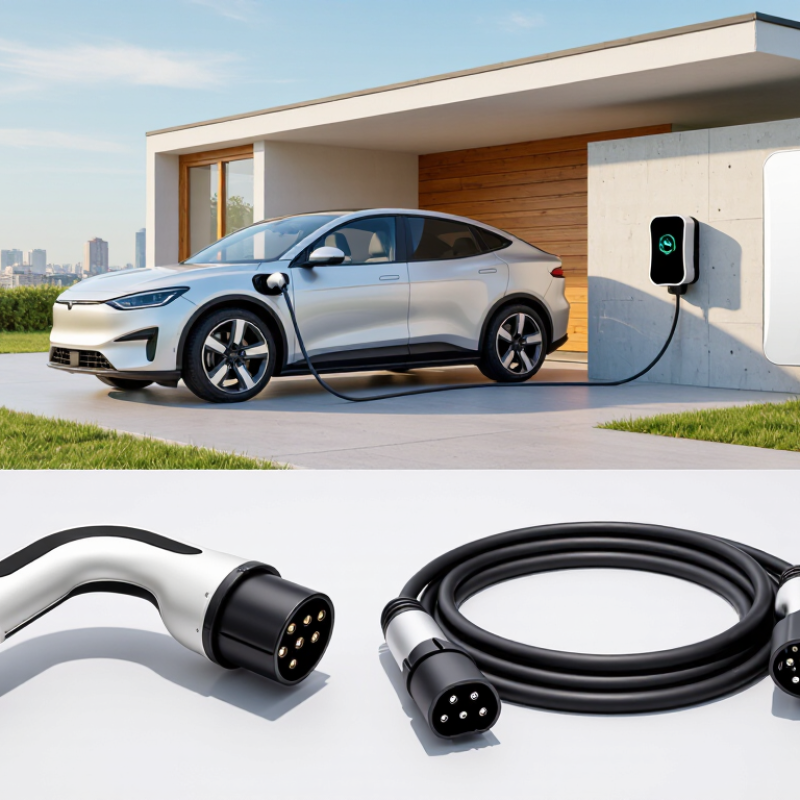
Type 1 and Type 2 are AC charging standards, not simply different plug shapes. Type 1 follows SAE J1772 and is common in North America and Japan. It usually has five pins and supports single-phase charging. Type 2 follows IEC 62196-2 and is widely used across Europe and other regions. Its seven-pin design can support single-phase or three-phase AC charging.

The vehicle inlet must match the cable connector. A Type 1 car generally needs a Type 1-to-Type 2 cable when using a Type 2 charging station. Check both ends carefully. A loose fit, damaged latch, or exposed pin can interrupt charging and create a safety concern. The cable’s current rating also matters. A 32-amp cable cannot make a vehicle charge faster than its onboard charger allows. The charging station sets another limit.

Cable length changes daily convenience. A five-metre cable reaches many driveway sockets, while a longer cable helps when parking is awkward. However, extra length adds weight and storage trouble. Do not assume every public socket supports the same power. Confirm the vehicle manual, station label, and cable specification. Adapters can be useful, but uncertified products deserve caution. Standards reduce confusion, yet real installations are not always perfect. Check the details twice.


Vehicle and Regional Compatibility Requirements

Choosing a Type 1 or Type 2 charging cable starts with your vehicle’s inlet and charging region. Type 1 connectors are common in North America and Japan. Type 2 connectors are widely used across Europe and several other markets. Regional patterns are useful, but they are not absolute. Imported vehicles can break the usual rule. Do not guess.

Check the connector shape, pin arrangement, and charging specification in your vehicle manual. Then compare them with the charging station socket. A Type 1 cable may suit a vehicle with a single-phase inlet, while Type 2 equipment can support single-phase or three-phase AC charging. Your vehicle’s onboard charger still limits the actual charging speed. A higher-rated cable cannot make the car charge faster than its design allows.

Voltage and current ratings also matter. Some regions commonly use different household voltages, so a cable designed for one market may not suit another installation. Confirm the cable’s amperage, voltage range, locking method, and safety certification. Ask a qualified electrician when the home circuit is unclear. Small details matter.

An adapter may appear convenient, yet it can create fit, heat, or communication problems. Use one only when the vehicle and charging equipment documentation specifically supports it. A connector can fit and still disappoint. I would rather spend time checking the inlet label than discover slow charging beside a cold garage wall. Keep the cable dry, inspect its pins, and replace it after visible damage.

Comparing Charging Speed, Power Ratings, and Connector Design

Choosing between a Type 1 and Type 2 charging cable starts with connector design, not advertised speed. Type 1 connectors usually have five pins and support single-phase AC charging. They are common in North America and Japan. Type 2 connectors generally have seven pins and support single-phase or three-phase AC charging. They are widely used across Europe and many other regions.

Charging speed depends on the vehicle, charger, electrical supply, and cable rating. A 16-amp cable can deliver about 3.7 kW on a 230-volt supply. A 32-amp cable can reach about 7.4 kW with single-phase power. A compatible Type 2 system may provide 11 kW or 22 kW through three-phase charging. However, a car limited to 7.4 kW will not charge faster with a 22 kW cable. I once focused too much on the connector shape. That was a costly assumption in planning terms. Cable length also matters, because longer cables can be heavier and may create more voltage loss or handling difficulty.

Tips: Check the vehicle socket and maximum AC input before buying. Match the cable’s current rating with the charging equipment. Inspect pins, seals, and insulation for heat marks or cracks. Choose a practical length, not the longest option. Read the rating label carefully; “faster” is often conditional. When uncertain, verify the specifications with a qualified electrician or the vehicle manual.

Selecting the Right Cable for Your Electric Vehicle

How to Choose a Type 1 or Type 2 Charging Cable?

Selecting the Right Cable for Your Electric Vehicle

Choosing a charging cable begins with your vehicle’s inlet, not its appearance. Type 1 connectors usually support single-phase AC charging and are common on some older electric vehicles. Type 2 connectors are widely used across Europe and support single-phase or three-phase charging. Check the vehicle manual or inlet label before purchasing.

Charging speed also matters. A cable rated for 32 amps may not make your car charge faster if its onboard charger accepts only 16 amps. I once focused too much on cable length and overlooked this limit. That was a poor buying habit. Check the vehicle’s maximum AC input, charging station output, and cable current rating together.

Length affects daily comfort. A five-meter cable often reaches a driveway socket, while a longer cable can help at crowded public stations. However, extra length adds weight and storage difficulty. Look for strong insulation, sealed connectors, and clear safety markings for outdoor use. Avoid damaged cables, loose pins, or connectors that feel unusually hot. Do not assume a Type 1-to-Type 2 adapter is automatically suitable. Compatibility, electrical limits, and local safety requirements must match. When the specifications remain unclear, ask a qualified electrician or charging specialist to inspect the setup.


How to Choose a Type 1 or Type 2 Charging Cable? - Selecting the Right Cable for Your Electric Vehicle

Comparison Dimension Type 1 Charging Cable Type 2 Charging Cable Selection Guidance
Technical standard SAE J1772, also known as IEC Type 1 IEC 62196-2, also known as IEC Type 2 or Mennekes-style connector Match the cable standard specified for the vehicle's AC charging inlet.
Common regional use Commonly used on vehicles and AC charging equipment in North America and Japan Commonly used in Europe, the United Kingdom, Australia, New Zealand, and many other markets Regional charging infrastructure is a useful first indication, but the vehicle inlet remains the deciding factor.
AC phase capability Normally single-phase AC Single-phase or three-phase AC, depending on the vehicle and charging installation Choose Type 2 when three-phase charging is required and supported by both the vehicle and the site.
Typical AC voltage range Typically 120 V or 208–240 V AC, depending on the local electrical system Typically 230 V single-phase or approximately 400 V three-phase in European-style systems Verify the charging station's output voltage and the vehicle's permitted input voltage.
Common current ratings Common portable and public-cable ratings include 16 A or 32 A Common ratings include 16 A or 32 A per phase; higher ratings exist for specific installations The cable, charging station, circuit, and vehicle must all support the selected current.
Typical maximum AC charging power About 3.7 kW at 16 A or about 7.4 kW at 32 A on a 230 V single-phase supply About 3.7 kW at 16 A single-phase, 7.4 kW at 32 A single-phase, or up to about 22 kW at 32 A three-phase Actual charging power is limited by the lowest-rated component and the vehicle's onboard charger.
Connector design Five main contacts: two power contacts, protective earth, and two control contacts Seven main contacts: three power contacts, protective earth, neutral, and two control contacts The connector shape and contact arrangement are not interchangeable without approved vehicle-specific equipment.
Mechanical locking Usually uses a latch on the vehicle-side connector Often uses an electrically controlled locking mechanism in the vehicle inlet or charging station Confirm that the cable locks securely and can be released according to the vehicle's instructions.
Compatibility with DC fast charging The AC Type 1 connector alone does not provide DC fast charging; compatible vehicles may use a separate combined DC inlet The AC Type 2 connector alone does not provide DC fast charging; compatible vehicles may use a separate combined DC inlet Do not use an AC cable to determine DC fast-charging compatibility.
Recommended cable length Approximately 5 m is a practical general-purpose length; longer cables improve reach but add weight Approximately 5 m is suitable for most home and public charging situations; 7 m or more may help with difficult parking layouts Select the shortest length that reliably reaches the inlet without placing tension on the connector.
Cable construction Commonly available as a flexible single-phase cable with suitable outdoor insulation May be a thicker single-phase or three-phase cable because it can carry more conductors Choose a cable rated for outdoor use, repeated bending, temperature exposure, and the required current.
Best choice for Vehicles with a Type 1 inlet and charging sites using Type 1-compatible equipment Vehicles with a Type 2 inlet, especially where three-phase AC charging is available Always prioritize the vehicle manual, inlet shape, local regulations, and charging-station connector.
Key buying checks Connector type, current rating, cable length, weather resistance, and safety certification Connector type, single- or three-phase configuration, current rating, cable length, and safety certification Never select a cable based only on maximum advertised power; verify the complete charging system.

Note: Charging speed depends on the vehicle's onboard charger, the charging station, the electrical supply, cable rating, and applicable local limits. The figures shown are typical reference values rather than guaranteed charging performance.

Safety, Durability, and Practical Buying Considerations

How to Choose a Type 1 or Type 2 Charging Cable?

Type 1 and Type 2 cables serve different charging ecosystems. Type 1 usually supports single-phase AC charging and is common in North America and Japan. Type 2 is widely used across Europe and many other markets, often supporting single- or three-phase charging. Check your vehicle inlet and charger socket before purchase. Never rely on appearance alone.

Safety should guide the decision. Choose a cable with a clearly stated current rating, strong strain relief, and suitable weather protection. A thicker cable is not automatically safer. Look for recognized electrical certification and proper residual-current protection in the charging equipment. The International Energy Agency reported more than four million public charging points worldwide in 2023, showing how quickly charging environments are expanding (IEA, Global EV Outlook 2024). More public locations also mean more exposure to rain, dust, bending, and careless storage.

Durability is practical, not decorative. Inspect the connector housing, flexible jacket, locking mechanism, and bend resistance near both plugs. For outdoor use, verify the stated IP rating and operating temperature range. A cable that feels heavy may still age badly if its jacket cracks in cold weather. The U.S. Department of Energy’s Alternative Fuels Data Center emphasizes matching charging equipment with vehicle requirements and electrical capacity (AFDC, 2024). I would also leave room for doubt: a longer cable is convenient, but it adds weight and can remain on wet ground. Buy the shortest certified cable that comfortably reaches the socket. Good choices are rarely dramatic.

Get an Instant Quote

Share Your Feedback