Choosing a China-based manufacturer for a Hydraulic Static Pile Driver requires more than comparing prices or advertised pressing force. Buyers should examine machine specifications, factory quality controls, commissioning support, and documented performance on comparable projects. A static pile driver presses piles into the ground using hydraulic force, rather than relying on impact blows. That can reduce noise and vibration, but site conditions still matter. Soil layers, groundwater, pile dimensions, and nearby structures affect equipment selection and installation planning.
Geotechnical engineer Dr. Bengt H. Fellenius is known for his work on pile foundations. A practical paraphrase of his engineering approach is: “Pile performance must be assessed through ground conditions and measured response, not equipment claims.” This is a paraphrase, not a verified verbatim quotation. Keep that distinction clear when reviewing technical information. Ask manufacturers for load charts, operating limits, quality documentation, and references for comparable installations. Look closely at the details: hydraulic pressure readings, pile alignment, reaction-system setup, and the space required for transport and assembly. These can reveal whether a machine suits a real project, not just a brochure. No single model fits every site. A careful comparison should consider both the driver and the engineering plan behind its use. This outline introduces the main points for evaluating China’s leading manufacturers, while recognizing that “top” depends on verified project needs and evidence.
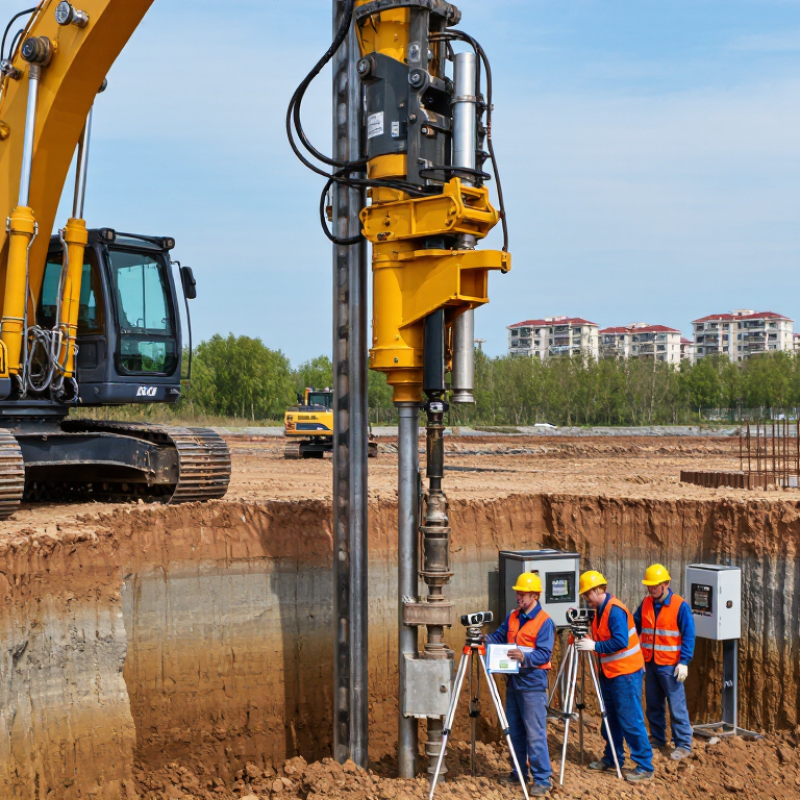
A hydraulic static pile driver installs piles by pressing them into the ground, rather than striking them with a hammer. Hydraulic jacks grip the pile and apply steady downward force. The machine balances that force with counterweights or reaction piles already installed. This makes it useful near buildings, hospitals, and other vibration-sensitive sites. Installation still depends on pile type, soil layers, access, and available reaction capacity.
Noise figures need careful interpretation. The FHWA Construction Noise Handbook (2006) reports reference levels of 101 dBA for impact pile driving and 95 dBA for vibratory pile driving, measured at 50 feet. These are not measurements of static press-in equipment, but they help explain why quieter methods may be considered. Site-specific monitoring is still needed. FHWA’s Design and Construction of Driven Pile Foundations (2016) also emphasizes subsurface investigation and installation records. Watch pile verticality, hydraulic pressure, and penetration rate; a rising pressure reading alone does not prove the required bearing capacity.

A hydraulic static pile driver turns oil pressure into controlled downward force. Its main components are a power pack, hydraulic cylinders, gripping jaws, a reaction frame, and sensors. The jaws clamp the pile; cylinders push it into the ground while reaction piles anchor the frame. No hammer blow is needed. Quiet, but not effortless.
Force depends on pressure and piston area. For example, 25 MPa acting on 0.02 square metres produces about 500 kN, before losses. This is an illustrative calculation, not a machine rating. FHWA’s Design and Construction of Driven Pile Foundations, NHI-16-009, describes evaluating pile installation through soil data, driving records, and load testing. For static systems, operators should also log hydraulic pressure, penetration depth, and time. These readings help identify changing resistance or a slipping clamp. Small details matter.
Hydraulic oil heats during long cycles, and seals can leak; pressure readings alone cannot confirm safe grip. ASTM D1143/D1143M provides procedures for static axial compression load tests, useful for checking foundation performance independently of installation pressure. A field note worth keeping: soil layers can change over a few metres. The driver may need adjustment, and the first settings may be wrong. That is not a failure; it is a reason to measure and review.
A dependable hydraulic static pile driver begins with a clear production plan. Engineers review pile dimensions, ground conditions, and required pressing force before finalizing the machine layout. Steel plates are checked for thickness and surface defects, then cut and assembled using controlled procedures. Weld areas receive visual inspection, with critical joints examined more closely. Small details matter.
Hydraulic cylinders, pumps, and hoses are matched to the machine’s operating range. Technicians verify pressure gauges against calibrated equipment and inspect connections for leaks. During assembly, alignment checks help prevent uneven loading on the frame. A test run records pressing force, movement, and system temperature. Results should be documented, not simply remembered.
Quality control continues after the first successful cycle. Inspectors can repeat pressure and functional tests, then review fasteners, guards, and emergency stops. A checklist helps, though it can still miss a loose fitting or an unusual vibration. That is why experienced technicians listen to the machine and recheck suspect areas. Manufacturing standards are useful only when workers apply them consistently and keep traceable inspection records. No process is flawless; honest reporting of defects supports safer, more dependable equipment.
| Manufacturing Stage | Key Activities | Quality Checks and Records | Relevant Standard or Control Basis |
|---|---|---|---|
| Engineering and design review | Confirm the intended pile types, operating conditions, machine configuration, hydraulic functions, electrical requirements, and safety provisions before production. | Review approved drawings, component specifications, design calculations, risk controls, and revision status. Confirm that rated capacities and operating limits are defined for the specific model. | Project specifications and applicable machinery, hydraulic, and electrical safety requirements. Design limits should be established for each machine configuration. |
| Incoming material and component inspection | Receive and identify structural steel, hydraulic cylinders, pumps, valves, motors, hoses, electrical components, and purchased assemblies. | Check material certificates where specified, dimensions, surface condition, part identification, and supplier documentation. Record inspection results and traceability information for controlled components. | Approved drawings, purchase specifications, and the manufacturer’s incoming-inspection procedure. |
| Structural fabrication | Cut, form, machine, and weld the frame, clamping assemblies, support structures, and other load-bearing parts. | Inspect dimensions and alignment against drawings. Examine weld appearance and, where required by the design or inspection plan, use suitable non-destructive testing. Record repairs and re-inspections. | Approved fabrication drawings, welding procedures, inspection plans, and specified acceptance criteria. |
| Machining and surface preparation | Machine interfaces, pin holes, bearing seats, cylinder mounts, and other fitted features; prepare surfaces before coating. | Verify critical dimensions, fit, flatness, and alignment using calibrated measuring equipment. Check surface preparation and coating condition against the specified process. | Part drawings, fit requirements, coating specifications, and calibrated inspection equipment procedures. |
| Hydraulic system assembly | Install the pump, reservoir, cylinders, valves, filters, hoses, manifolds, and hydraulic connections; clean components and lines during assembly. | Check routing, connection security, cleanliness controls, fluid specification, leakage, and operation of hydraulic functions. Test pressure and settings against the approved design values rather than a generic machine-wide value. | GB/T 3766-2015, Hydraulic fluid power — General rules and safety requirements for systems and their components, where applicable; approved hydraulic schematics and test procedures. |
| Electrical and control system installation | Install wiring, control devices, sensors, protective devices, and operator interfaces according to the approved electrical drawings. | Check wiring against schematics, protective earthing, circuit protection, control response, emergency-stop function, and interlocks provided by the design. Document functional-test results. | GB/T 5226.1-2019, Safety of machinery — Electrical equipment of machines — Part 1: General requirements, where applicable; approved electrical drawings. |
| Mechanical and system integration | Fit the hydraulic and electrical assemblies to the structure; install clamps, guides, travel systems, counterweights, and other model-specific components. | Verify fastener installation, clearances, alignment, moving-part operation, guards, hose protection, and access for maintenance. Confirm that installed parts match the approved bill of materials. | Assembly drawings, torque or fastening instructions, safety review, and the manufacturer’s inspection plan. |
| Factory functional testing | Operate the completed machine through its specified hydraulic, clamping, pressing, lifting, and control functions under controlled test conditions. | Check for abnormal noise, leakage, overheating, unstable movement, and control faults. Record test conditions and results; verify rated values using the model’s approved test procedure. | Approved factory test procedure, product specification, and applicable safety requirements. Acceptance values depend on the machine design and configuration. |
| Safety and protection checks | Inspect guards, warning labels, emergency controls, access points, and electrical enclosures included in the machine design. | Confirm that safety devices operate as intended and that enclosure protection matches the specified environmental conditions. Record any corrective actions and retest results. | GB/T 4208-2017, Degrees of protection provided by enclosures (IP Code), where an IP rating is specified; applicable machinery safety requirements. |
| Final inspection and release | Complete the final review before dispatch, including machine identification, documentation, supplied accessories, and finish condition. | Review inspection and test records, confirm open issues are closed, and check that operating and maintenance documents match the delivered configuration. | Customer order, approved technical documents, final-inspection checklist, and applicable regulatory requirements. |
| Packaging and shipment preparation | Protect exposed surfaces and components, secure movable parts, and prepare the machine or components for the agreed transport method. | Check packaging condition, load restraint, moisture protection where required, and shipping-document consistency. Photograph or record the packed condition when required by the shipment plan. | Transport requirements, customer instructions, and the manufacturer’s packaging and dispatch procedure. |
Note: The listed standards are references that may apply depending on the machine design, contract, and regulatory scope. They do not replace project-specific requirements, approved drawings, or the manufacturer’s documented acceptance criteria.
Hydraulic static pile drivers press piles into the ground using hydraulic clamping and reaction force, rather than repeated hammer blows. They suit urban foundations, bridge approaches, rail corridors, and sites near vibration-sensitive structures. A compact rig can work beside existing walls, provided its reaction system has enough support. Tight access helps, but does not guarantee productivity.

Soil conditions are decisive. FHWA’s Design and Construction of Driven Pile Foundations (2016) stresses subsurface investigation and construction monitoring for reliable installation. Dense gravel, obstructions, or hard layers can slow pressing or require predrilling, changing schedule and capacity assumptions. Pile section, length, clamp fit, hydraulic flow, and available reaction weight also affect advance rate. Small details matter. Record penetration depth and pressure consistently; pressure alone does not prove final bearing performance.
Noise comparisons need care. FHWA’s Highway Construction Noise Handbook (2006) lists impact pile driving at about 101 dBA at 50 feet. That is an impact-driver benchmark, not a measured static-driver rating; site acoustics and machine setup change results. Static pressing can reduce impulsive noise and vibration, but monitoring remains prudent near occupied buildings. One limitation is easy to overlook: reaction piles or extra counterweight consume space. On cramped sites, the quieter option can still be logistically awkward.
Choosing a hydraulic static pile driver requires more than comparing machine prices. Ask how the equipment performs in soil conditions like yours. Request operating data for similar pile sizes, required pressing force, and daily production. Check whether the machine’s clamps suit your pile dimensions and whether its hydraulic system maintains stable pressure during continuous work. Small details matter. Inspect welds, hose routing, and access to service points.
A credible manufacturer should provide clear technical drawings, component specifications, inspection records, and commissioning guidance. Ask to see a completed machine under load, not only polished photographs. If possible, speak with customers who have used similar equipment on active sites. Observe how the machine moves between piles and how operators monitor alignment and pressure. A demonstration is useful, but it cannot replace long-term field feedback.
After-sales support deserves careful scrutiny. Confirm which parts are stocked, how quickly technicians can respond, and what training is included. Written answers help reveal gaps. A tidy factory and confident sales presentation are reassuring, but they do not prove reliable performance. I would also compare the supplier’s claims with independent project records; this step takes time, and sometimes the available evidence remains incomplete. That uncertainty should be discussed before ordering.

We offer Packaging Boxes delivered to your door. Secure, professional, and affordable, our custom made packaging boxes are guaranteed to protect and transport your valuable items. Our devoted team is always there to serve you.