7 Best Fresh Fruit Export Packaging Solutions?

Fresh Fruit Export Packaging Solutions are becoming a commercial necessity, not merely a branding choice. Fresh produce may travel through farms, packhouses, ports, warehouses, and retail displays before reaching consumers. Each transfer adds pressure, vibration, temperature changes, and handling risk. A bruised peach can lose value within hours. A poorly ventilated carton can trap condensation and accelerate decay.

The FAO’s The State of Food and Agriculture 2019 estimates that about 14% of global food is lost between harvest and retail. That figure highlights the importance of packaging designed around real distribution conditions. The UNEP Food Waste Index Report 2024 also reports 1.05 billion tonnes of food waste in 2022 across retail, food service, and households. Packaging cannot solve every loss. It can, however, support better protection, airflow, stacking, traceability, and cold-chain performance. Strong solutions may include molded pulp trays, ventilated corrugated cartons, reusable plastic crates, modified-atmosphere films, and moisture-control inserts. The correct choice depends on fruit sensitivity, export distance, climate, pallet design, and handling equipment. One format rarely fits all routes. That is an important limitation.

This guide examines seven practical Fresh Fruit Export Packaging Solutions for exporters and supply-chain teams. It considers product safety, material efficiency, labor requirements, and end-of-life performance. Real experience matters here. A package that performs well in a laboratory may fail beside a humid loading dock. Careful trials remain essential.
7 Best Fresh Fruit Export Packaging Solutions?

What Fresh Fruit Export Packaging Must Protect

7 Best Fresh Fruit Export Packaging Solutions?

Fresh fruit export packaging must protect produce from bruising, heat, moisture, contamination, and pressure. A strong package keeps fruit stable during loading, long transit, and repeated handling. Small design errors can cause major losses.

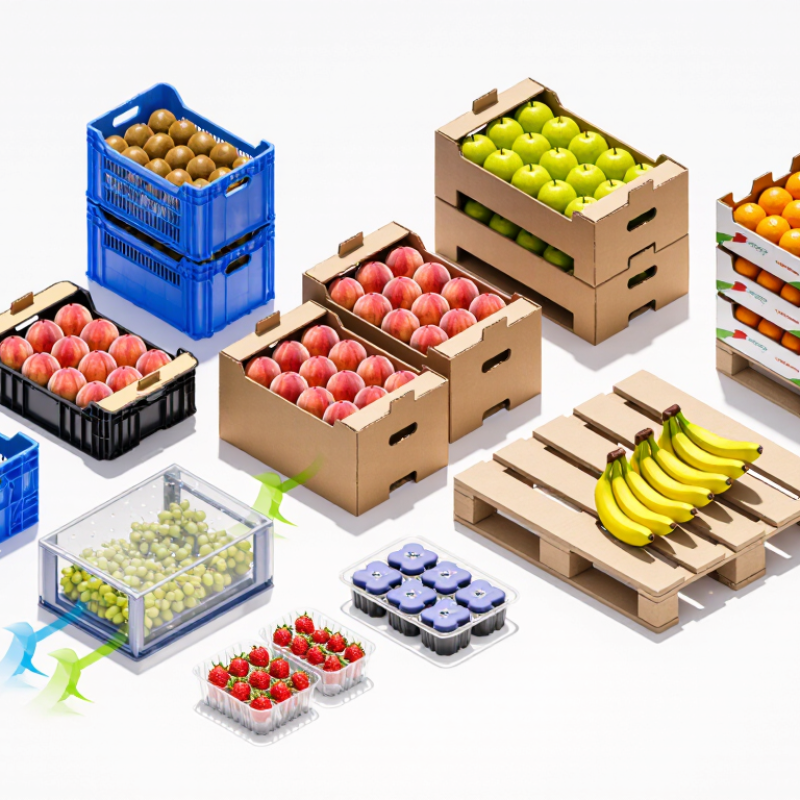
Vented corrugated cartons support airflow and reduce heat buildup. Molded pulp trays separate delicate fruit and limit skin damage. Clamshell containers protect berries from crushing while allowing quick quality checks. Insulated liners help maintain a safer temperature during airport or road delays. For sensitive fruit, use moisture-absorbing pads and liners that prevent condensation. Keep it dry.

Pallet stretch wrap improves load stability, but it should not block ventilation holes. Reusable plastic crates suit firm fruit and repeated shipping routes. They resist stacking pressure and are easier to sanitize between uses. Packaging teams should also match box strength to fruit weight, pallet height, and transport duration. A carton that works for apples may fail with ripe peaches.

In packing trials, corner damage often reveals weak pallet alignment rather than poor carton material. Temperature loggers can expose warm zones inside a shipment. This evidence helps improve vent placement and liner selection. Still, no package solves every route. Overpacking can restrict airflow, while underpacking allows movement. Check fit, humidity, and handling conditions before export. There is always room to refine the design.


How to Select Packaging Materials for Different Fruit Types

7 Best Fresh Fruit Export Packaging Solutions?

How to Select Packaging Materials for Different Fruit Types

Fresh fruit packaging should match the fruit’s skin, weight, moisture, and respiration rate. There is no universal solution. Firm apples and pears often suit ventilated corrugated cartons with molded pulp trays. These materials reduce bruising while allowing cold air to circulate. Soft berries need shallow trays, breathable films, and secure lids. Excessive sealing can trap condensation. Moisture changes everything.


Citrus fruit has a tougher surface but still needs cushioning during long transport. Corrugated dividers, ventilated cartons, and moisture-resistant coatings can help. Stone fruit benefits from molded fiber trays because small impacts quickly become visible damage. Bananas require strong cartons with controlled airflow, since poor ventilation may accelerate ripening. For grapes, use rigid punnets or lined cartons that limit stem breakage and juice leakage. Test before scaling.

Packaging teams should check compression strength, ventilation openings, drainage, and cooling performance. A material that protects fruit at the warehouse may fail after several days in transit. Trial packs under realistic temperature and humidity conditions. Measure weight loss, surface marks, mold growth, and internal movement. Recyclable paper may appear ideal, but it can weaken after absorbing moisture. That limitation deserves honest attention. Packaging decisions should balance protection, handling efficiency, food-contact safety, and local export requirements. Small design changes, such as rounded corners or tighter tray spacing, can prevent significant losses.

Seven Fresh Fruit Export Packaging Solutions

Fresh fruit export packaging must protect quality from harvest to arrival. Seven practical solutions can reduce bruising, moisture loss, and temperature damage. Ventilated corrugated cartons support airflow during refrigerated transport. Molded pulp trays separate delicate fruit and limit pressure points. Reusable plastic crates suit repeated routes and resist stacking collapse. Their cleaning process must be strict.

Modified-atmosphere liners slow respiration when selected for the fruit variety. They should not trap excessive moisture. Absorbent pads manage condensation inside cartons and help prevent surface decay. Cushioning nets or paper wraps protect fruit with soft skins, especially during vibration. In packing trials, small adjustments often matter more than expensive materials.

Insulated cartons provide short-term protection during temperature changes. They are useful when loading delays occur. A calibrated temperature logger records conditions throughout the shipment. Clear handling labels guide workers on orientation, ventilation, and maximum stacking height. These seven solutions work best with strong packhouse discipline and verified cooling procedures. No package is perfect. Humidity, fruit maturity, route length, and handling habits can still expose weaknesses. Exporters should test filled cartons under realistic compression, vibration, and cold-chain conditions before scaling production. A box that survives the warehouse may fail after several days on the road. Feedback from receivers remains essential, even when the shipment appears successful.

7 Best Fresh Fruit Export Packaging Solutions

Typical nominal capacities vary by fruit, destination market, handling method, and ventilation requirements. Corrugated cartons, reusable crates, wooden crates, trays, clamshells, and modified-atmosphere liners are widely used to protect freshness and reduce damage during export transportation.

How to Design Packaging for Cooling, Handling, and Transport

Fresh fruit export packaging must protect quality during cooling, handling, and transport. The design starts with the fruit’s respiration rate, temperature, and moisture sensitivity. Ventilated cartons allow cold air to reach the center of each pallet. Large openings improve airflow, but they can weaken the carton. A perfect design is rare.

Use strong, food-safe corrugated board with moisture-resistant treatment. Small drainage paths help prevent condensation from softening the base. Cushioning should limit bruising without blocking ventilation. Fruit should not press directly against sharp corners. We learned this after finding pressure marks on lower layers. The package looked strong, but the stacking pattern was wrong.

Handling details matter. Corner posts, stable pallet footprints, and clear handholds reduce sudden movement. Keep carton height consistent to prevent uneven loads. During transport, use temperature loggers near the pallet center, where warming often starts. Test packages after pre-cooling, vibration, and repeated loading. Laboratory tests help, but field trials reveal careless forklift movement and damp warehouse floors. Leave room for those failures. A slightly heavier carton may cost more, yet it can protect valuable fruit and reduce waste. Recheck the design when fruit size, harvest timing, or shipping routes change.

How to Verify Packaging Safety, Sustainability, and Export Compliance

Fresh fruit export packaging should protect quality while proving safety, sustainability, and compliance. Seven practical options include ventilated corrugated cartons, reusable plastic crates, molded-fiber trays, moisture-absorbing pads, insulated pallet covers, ethylene-control sachets, and modified-atmosphere liners. Each solution needs product-specific validation. A package that protects apples may damage berries through excess humidity.

Request food-contact declarations, migration-test results, material specifications, and certificates of analysis from suppliers. Check package strength after cold storage, stacking, vibration, and condensation exposure. Measure pulp temperature with calibrated data loggers during trial shipments. The Food and Agriculture Organization reports that 13.2% of food is lost between harvest and retail globally. Poor airflow and temperature abuse can increase this loss.

Sustainability claims require evidence, not attractive wording. Compare recycled content, recyclability, reuse cycles, packaging weight, and damage rates. The 2024 UNEP Food Waste Index reported 1.05 billion tonnes of food waste in 2022, so preventing spoilage matters. For wooden components, verify ISPM 15 treatment and marking. Confirm destination-country food-contact and labeling requirements before production. Keep test reports, supplier declarations, pallet photographs, and traceability records together. A small gap remains: laboratory performance may not match a humid port or delayed customs inspection. Run a controlled pilot shipment, review failures honestly, and revise the packaging specification.

7 Best Fresh Fruit Export Packaging Solutions? - How to Verify Packaging Safety, Sustainability, and Export Compliance

No. Packaging Solution Best-Fit Fruit and Logistics Use Safety Verification Sustainability Checks Export Compliance Points Key Performance Data
1 Ventilated Corrugated Fiberboard Cartons Berries, stone fruit, citrus, apples, and pears transported by pallet, truck, sea, or air. Confirm food-contact suitability where direct contact occurs; test compression strength, edge-crush performance, moisture resistance, ventilation, and pallet stability. Check recycled-fiber content, responsible fiber sourcing, recyclable design, water-based coatings, and the absence of unnecessary plastic laminates. Verify destination-country labeling, net-weight declarations, traceability information, and any retailer packaging requirements. ISPM 15 does not apply to paperboard cartons. Typical advantages: low tare weight, printable surface, efficient palletization, and adjustable ventilation for cooling and humidity control.
2 Reusable Plastic Crates Hardy fruit such as citrus, apples, pears, and stone fruit in repeated domestic or regional distribution loops. Use food-grade material declarations; inspect for cracks, sharp edges, contamination, drainage performance, and adequate ventilation. Validate cleaning and sanitation procedures. Document expected reuse cycles, reverse logistics, washing-water management, repairability, and end-of-life recyclability. Confirm hygiene records, import requirements, phytosanitary documentation for the fruit, and any rules governing returnable transport packaging. Strong durability and ventilation; environmental performance improves when the crates achieve repeated trips and efficient backhauling.
3 Molded Fiber Punnets and Trays Soft or delicate fruit, including berries and small stone fruit, requiring individual separation and cushioning. Test wet strength, edge integrity, pulp cleanliness, odor transfer, dimensional stability, and compatibility with cold-chain condensation. Prefer fiber-based designs that are recyclable through accepted local streams; verify recycled content and whether coatings or additives affect recyclability. Confirm food-contact compliance, required origin and lot markings, and destination rules for fiber packaging and agricultural products. Good cushioning-to-weight ratio; moisture resistance must be validated because excessive humidity can reduce strength.
4 Recyclable Plastic Clamshells Berries, cherries, grapes, and other high-value fruit needing visibility, tamper evidence, and protection from crushing. Verify food-contact compliance, hinge and closure durability, ventilation, sharp-edge control, seal integrity, and resistance to cracking at refrigerated temperatures. Use a single polymer where possible, clearly identify the resin, minimize material weight, and confirm that the format is accepted by the target market’s recycling system. Check labeling space, recycling claims, environmental-marking rules, extended producer responsibility obligations, and destination-country food-contact requirements. High product visibility and good crush protection; ventilation openings must balance cooling with moisture retention.
5 Modified-Atmosphere Packaging Films Berries, cut fruit, grapes, and other products where respiration control can help maintain quality during transit. Validate oxygen and carbon-dioxide transmission rates, seal strength, puncture resistance, condensation behavior, and the package atmosphere for the specific fruit and temperature. Reduce film thickness only after performance testing; assess recyclable mono-material structures, downgauging, and the risk of increasing food waste if the package fails. Confirm food-contact declarations, migration testing where applicable, recycling claims, labeling rules, and cold-chain conditions required to maintain the validated atmosphere. Can extend marketable life when correctly designed; it is not a substitute for rapid precooling and continuous temperature control.
6 Temperature-Controlled Insulated Shippers High-value or temperature-sensitive fruit shipped by air, parcel service, or mixed-mode logistics. Perform thermal mapping, transit simulation, drop testing, leak testing, and coolant compatibility checks. Avoid direct contact between refrigerants and food unless specifically approved. Compare reusable versus single-use systems, recyclable insulation options, coolant recovery, package volume, and the emissions of return transport. Review air-transport requirements, dangerous-goods rules for applicable refrigerants, customs documentation, and destination-specific food-contact and waste requirements. Performance depends on starting product temperature, ambient profile, payload, insulation thickness, and opening frequency—not insulation alone.
7 Wooden Bins and Export Pallets Bulk apples, pears, citrus, melons, and palletized shipments requiring high load capacity and mechanical protection. Inspect for splinters, nails, mold, pests, odor, moisture, structural damage, and cleanable food-contact surfaces. Verify load capacity and stacking stability. Use responsibly sourced timber, design for repair and reuse, avoid unnecessary treatments, and separate damaged wood for approved recovery or disposal. Solid-wood packaging generally requires treatment and an official ISPM 15 mark when entering countries that enforce the standard. Confirm importing-country requirements before shipment. High strength and stackability; heavier tare weight and moisture exposure should be included in freight and handling calculations.
Verification checklist: Confirm food-contact documentation, packaging performance tests, cold-chain validation, product traceability, destination-country labeling, phytosanitary requirements, customs documents, recycling claims, and any applicable ISPM 15 or air-transport rules before commercial shipment.

Article Source:

Get an Instant Quote

Share Your Feedback